Fungal Firefighters: When Forests Burn, Mushrooms Respond
Mushrooms are the medics of the scorched earth.
Fire is natureβs reset buttonβbut it doesnβt end with charred stumps and silence. Beneath the ash, fungi rise first. They donβt just survive wildfiresβthey thrive in the aftermath, stabilizing soil, detoxifying the land, feeding regrowth, and literally stitching the forest back together. These are the unsung fungal firefighters of the ecosystemβPyrophilous fungiβand they are as magical as they are mycelial. From the burnt bones of the forest, a new world is bornβone spore at a time.
When the Spores Return Before the Trees (the Forest's First Responders)
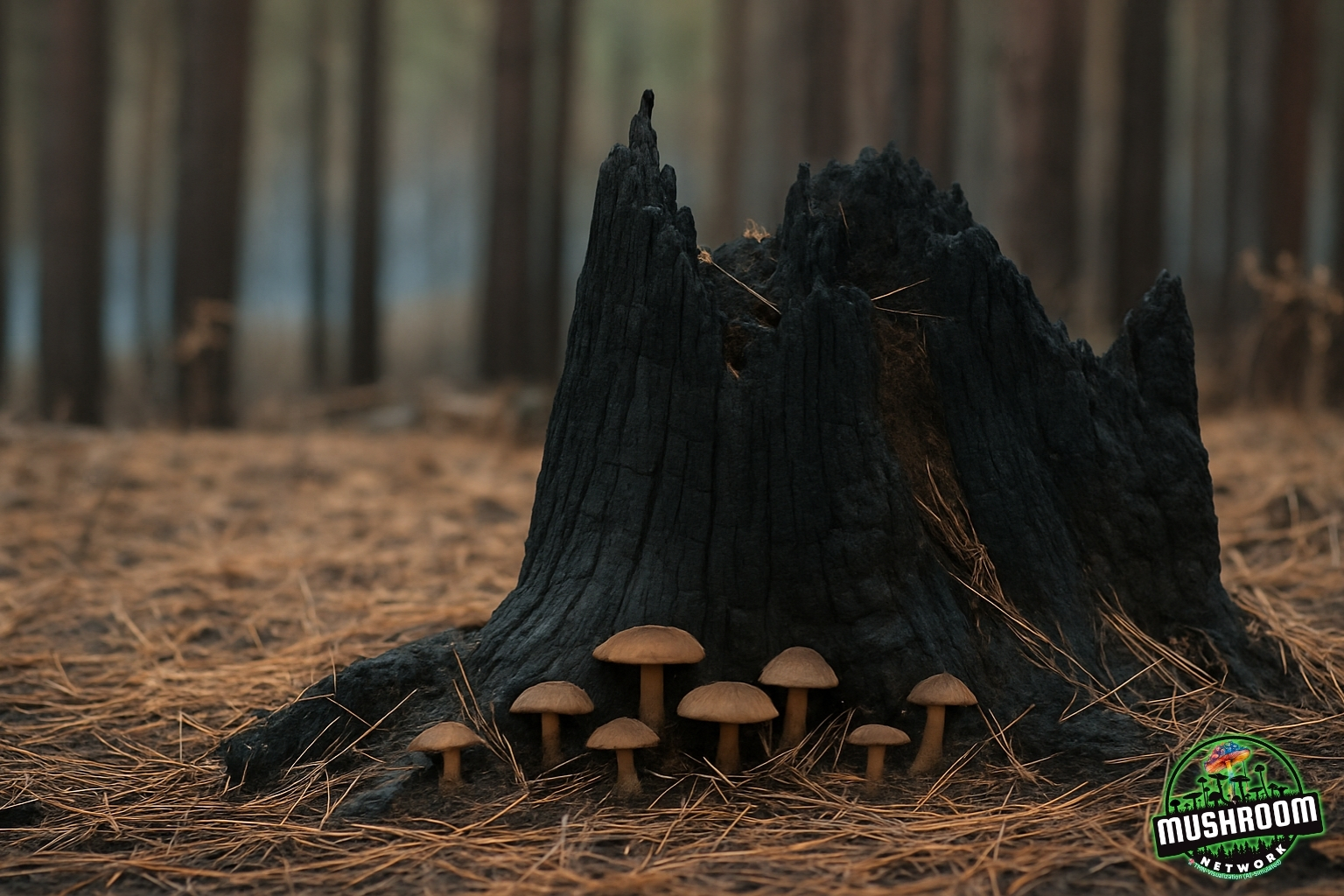
The flames have passed. Trees stand like skeletal memories. The air smells of carbon ghosts and scorched roots. Itβs quietβ¦ until the spores arrive.
What many see as a graveyard, mushrooms see as fertile territory. Fire doesnβt destroy their worldβit activates it. Welcome to the domain of pyrophilous fungiβfire-loving mushrooms that emerge from the ashes to detoxify the land, feed the next generation of plants, and reweave the very nervous system of the forest. These fungal firefighters donβt need water hoses or emergency sirensβthey arrive silently, stealthily, bringing renewal where all seems lost.
And the kicker? Theyβve been doing it for millions of years (maybe…***probably*** for much longer).
Who Are the Fungal Firefighters? Meet the Pyrophilous Species
The Heat-Activated Heroes of the Myco-Verse
π₯ Pyrophilous Fungi: The Flame-Loving Legion
From the wreckage of wildfire, they rise.
While most life scatters in fear of fire, some fungi awaken, called not by rain or lightβbut by smoke and heat.
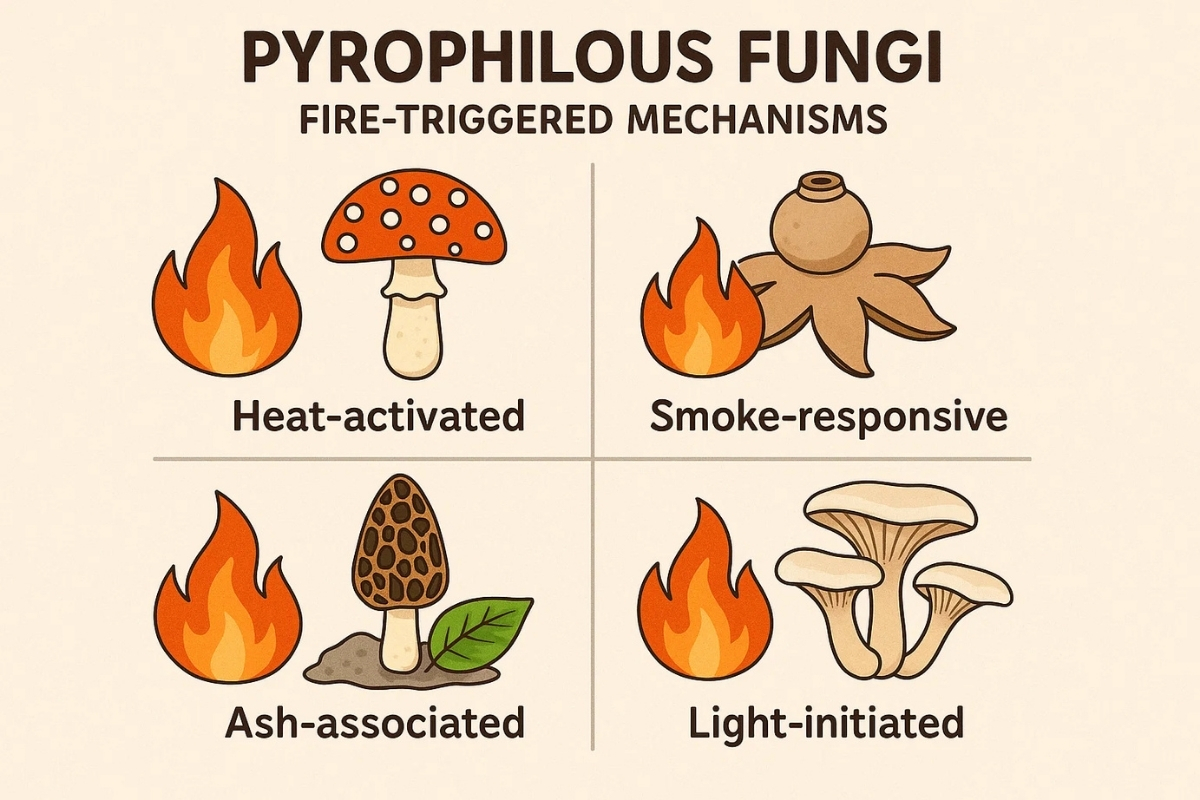
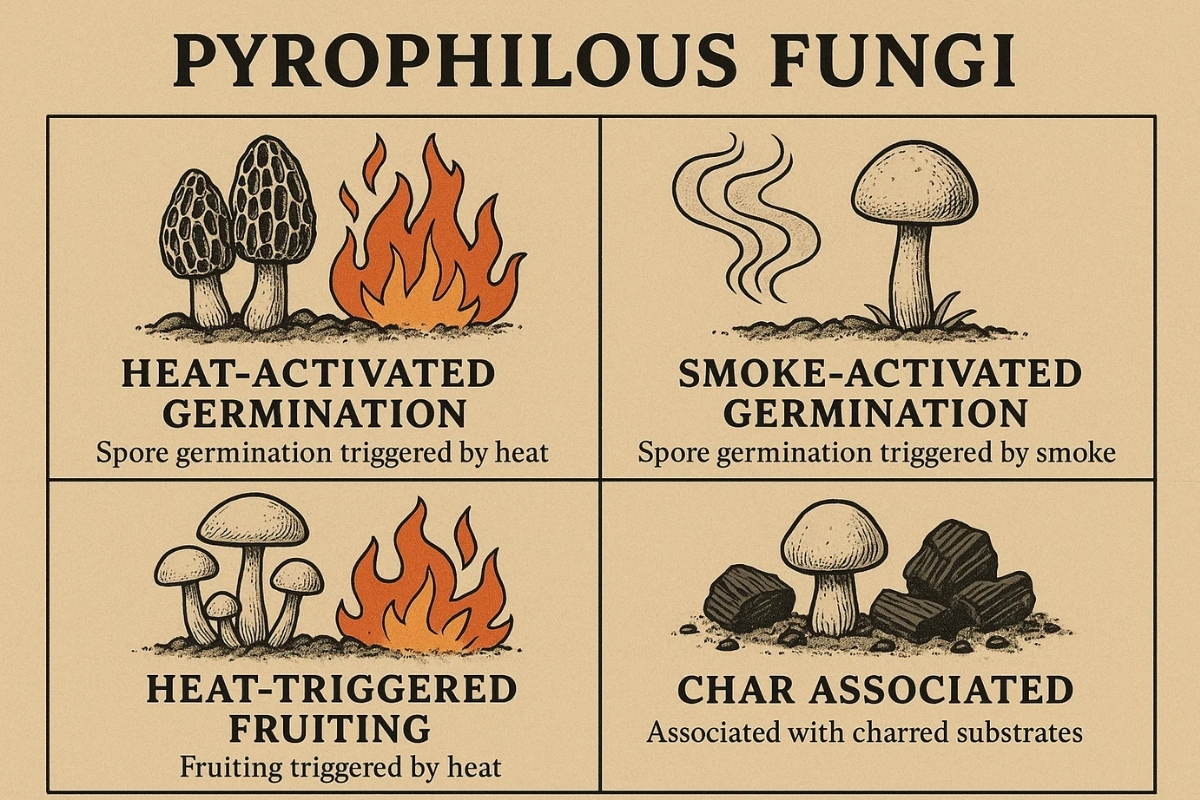
Pyrophilous fungi (from the Greek pyro = fire, philos = loving) are a rare class of organisms that donβt just survive fireβthey require it.
Theyβve adapted to dormancy so deep, only the searing kiss of flame can wake them.
Their spores lie in waitβin soil, on bark, inside duff and dungβfor years, decades even, doing nothingβ¦ until the heat comes.
Then?
Boom.
The forest is blackened, the competition wiped out, the nutrients unlocked.
And the fire-fungi bloom.
These arenβt your typical decomposers.
Theyβre ecological first responders, rushing into chaos to stabilize, recycle, and rebuild.
π Famous Fungal Firechasers: The Ash-Born All-Stars
When the forest falls silent and the smoke curls skyward, they arrive.
Not with fanfareβbut with purpose.
Each species evolved to follow fire like a conductor’s cue, blooming from char and ruin with surgical timing.
These arenβt just decomposers.
Theyβre the first wave of fungal restoration forcesβthe firechasers.
Letβs meet the Myco-Verseβs elite post-burn squad:
π½οΈ Morels (Morchella spp.) β The Ash Gourmet
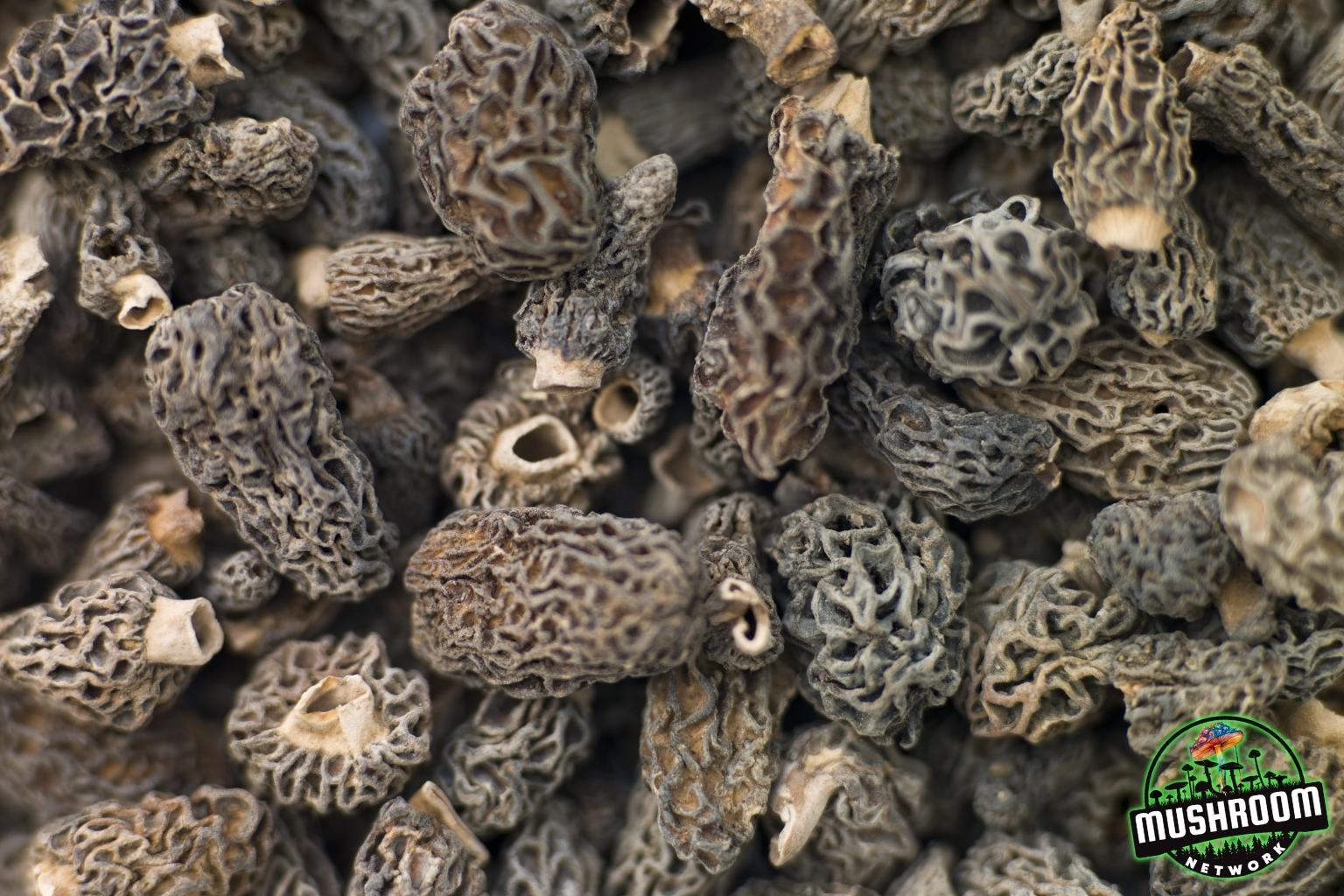
Ah yes, the morelβthat brainy, honeycombed treasure of the forest floor.
To the average forager, it’s a culinary jackpot.
To the forest? A fruiting phoenix.
These prized edibles often erupt in massive blooms the spring following a wildfireβespecially in conifer-heavy regions. But why?
Because fire flips a hormonal switch in the soilβaltering nitrogen levels, clearing competition, and signaling the morelsβ underground network to enter full reproductive overdrive.
And when they pop, they donβt whisper.
They storm the soil in fiery symphony, carpeting landscapes in one of natureβs most delicious survival tactics.
Some cultures call this the βfire flush.β
We call it the βchar-grilled banquet of the spore gods.β
πΆ Pyronema omphalodes β The Flaming Carpet Artist
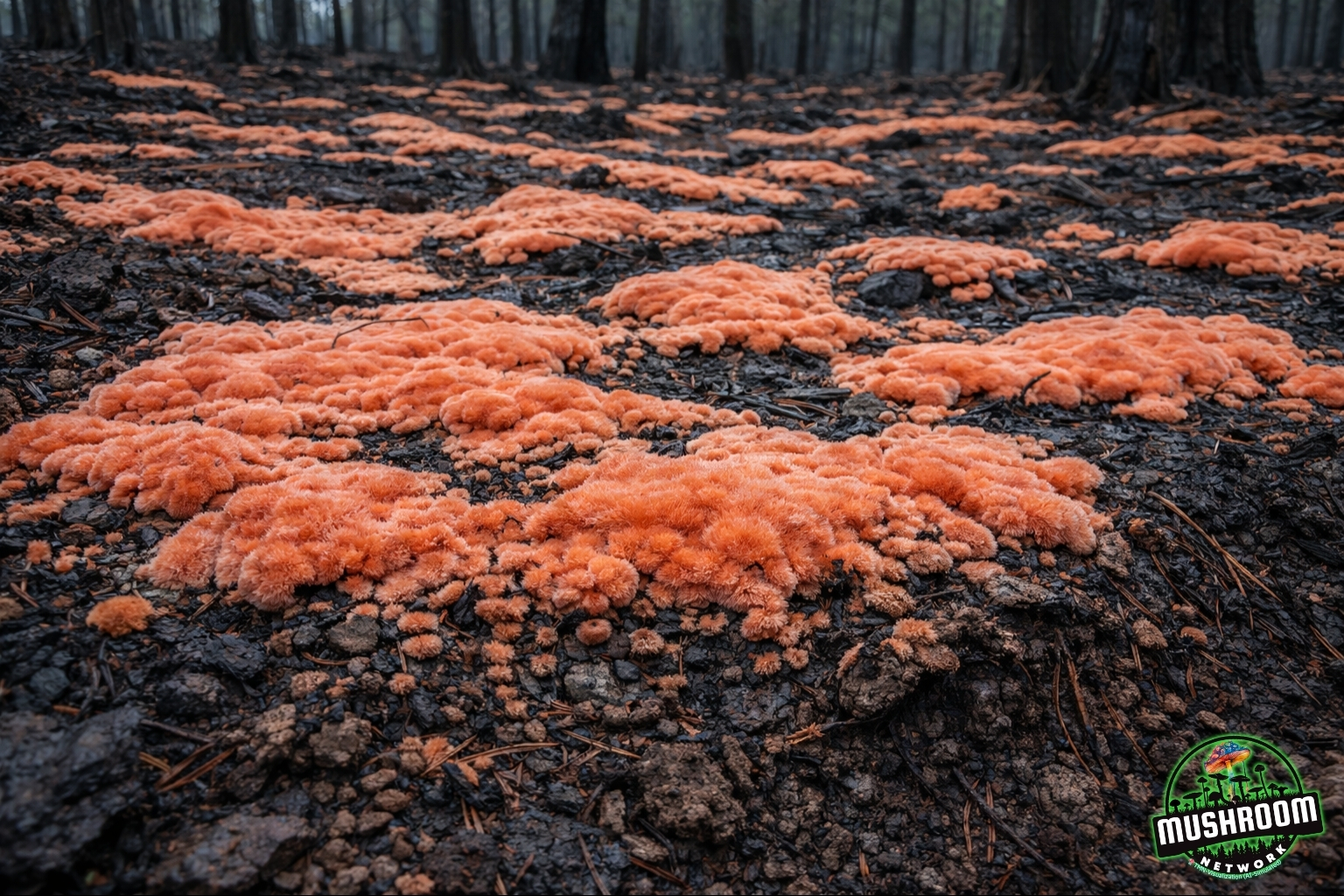
If morels are the gourmet introverts, Pyronema omphalodes is the neon extrovert of the fungal afterparty.
This bright orange-pink fungus is usually the first to show up after a burnβsometimes within 48β72 hours.
It forms dazzling, velvety mats across charred landscapes, making the ashes glow like an alien landing zone.
Its role?
Claim territory fast
Begin the biochemical reset
And maybe⦠just maybe⦠throw a little color back into the world
Itβs less βstealth modeβ and more βHELLO IβM HERE TO FUNKIFY THIS WASTELAND.β
Like fluorescent graffiti on charcoal canvas, Pyronema doesnβt just colonizeβit paints.
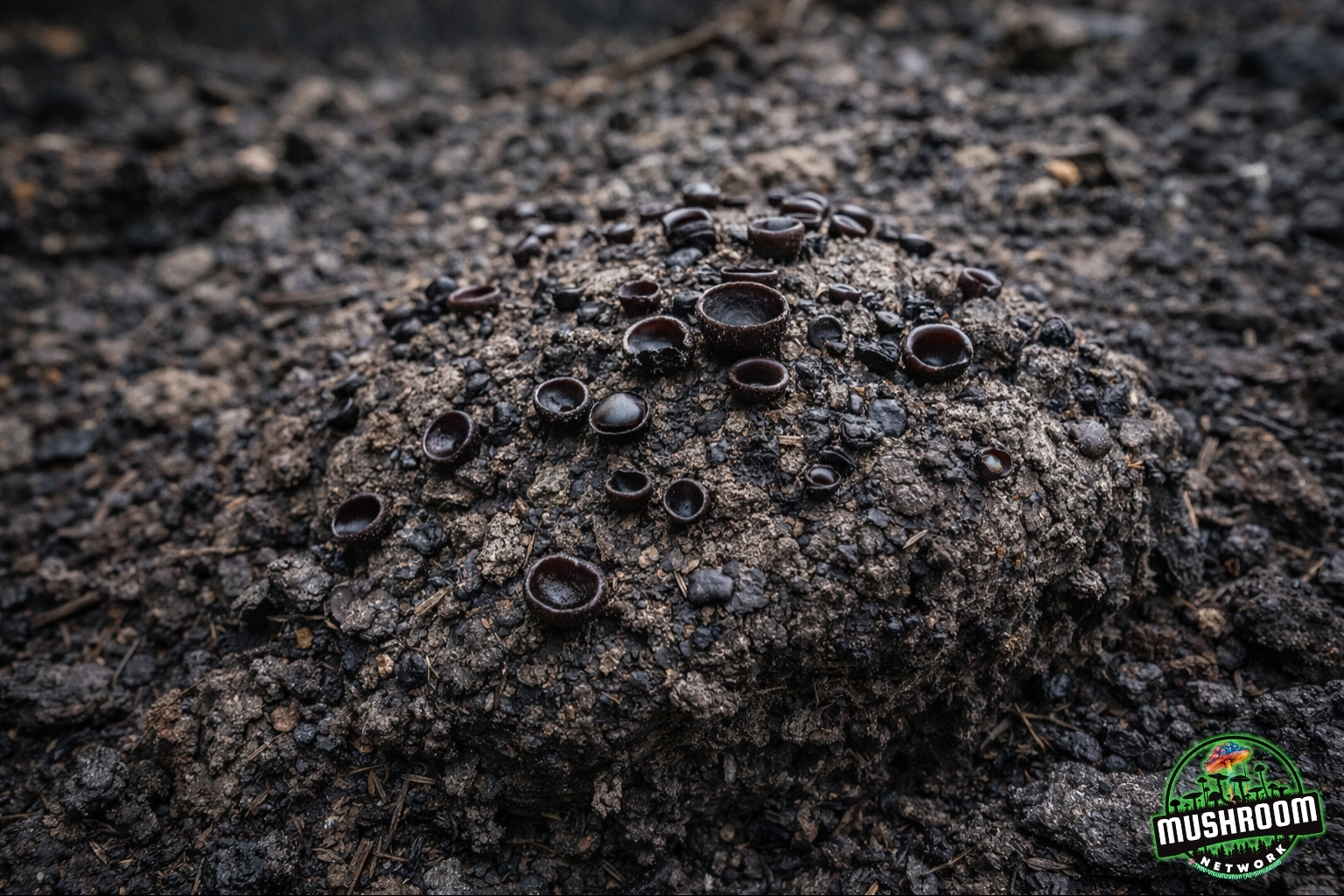
πͺ¨ Ascobolus carbonarius β The Ash-Goblin of the Burn Zone
Tiny. Obscure. Slightly grotesque.
But don’t laughβthis little dung-loving disco spore only shows up when things get really crispy.
Ascobolus carbonarius thrives exclusively in post-fire ash, particularly in burned-over animal waste.
Yeah, itβs gross.
But itβs also metal AF.
Think of it as the goblin mycologist of the underworld, emerging from smoldering poo piles to kickstart nutrient cycling.
What it lacks in size, it makes up for in ecological grit.
It doesn’t want glory.
It wants carbon-coated chaos and a buffet of smoldering decay.
Ash is its playground.
π₯π© is its love language.
π² Rhizopogon spp. β The Mycorrhizal Medics
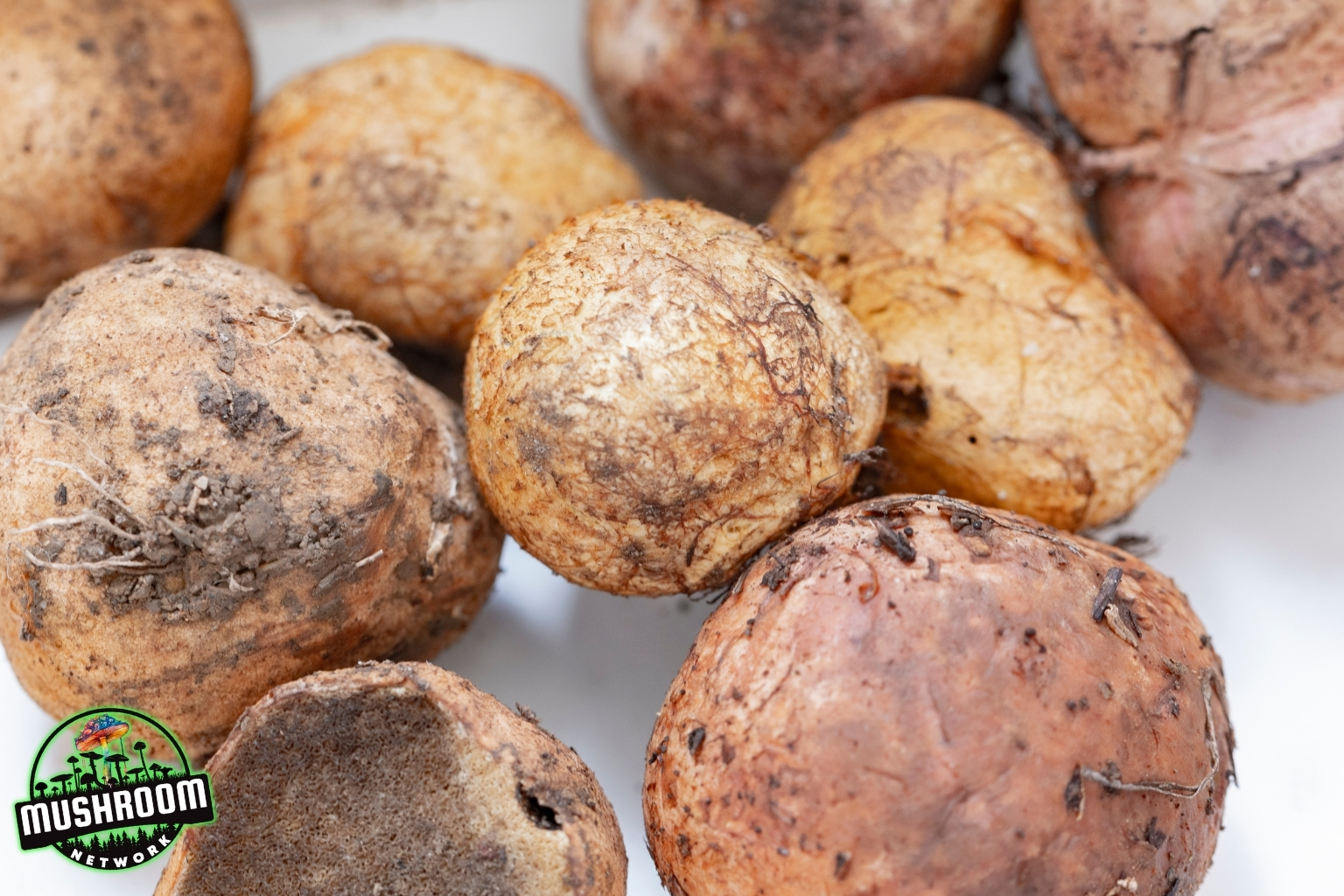
Deep under the forest floor, Rhizopogon plays the long game.
These subterranean heroes form symbiotic relationships with pine, fir, and other coniferous trees.
When the fire passes and the canopy is scorched, Rhizopogon kicks into rescue modeβdelivering water, nutrients, and biochemical support to root systems recovering from trauma.
You wonβt see it.
But itβs thereβa quiet, fungal EMT, rewiring tree roots and preparing the forest to rise again.
These spores donβt fruit immediately.
They wait. Heal. Rebuild.
Because sometimes, the most powerful responses are the ones that happen unseen, beneath the blackened soil.
𧬠Heat as a Genetic Key
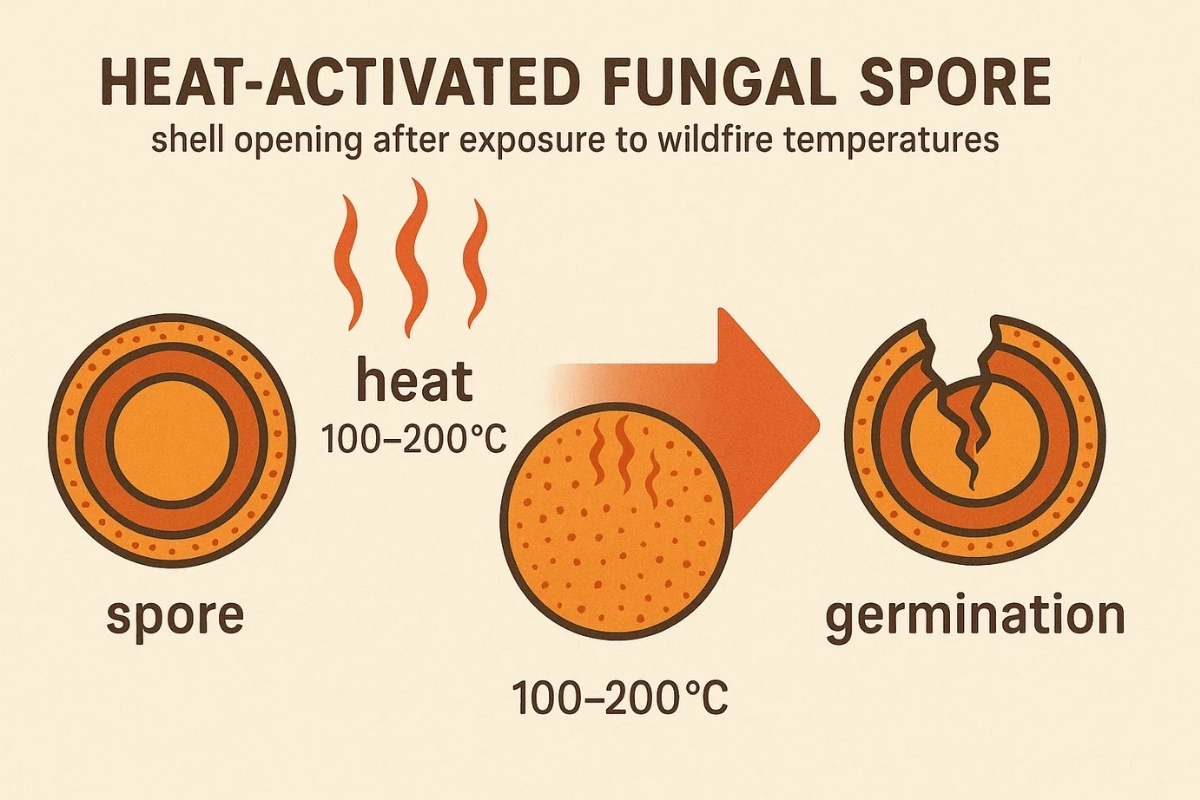
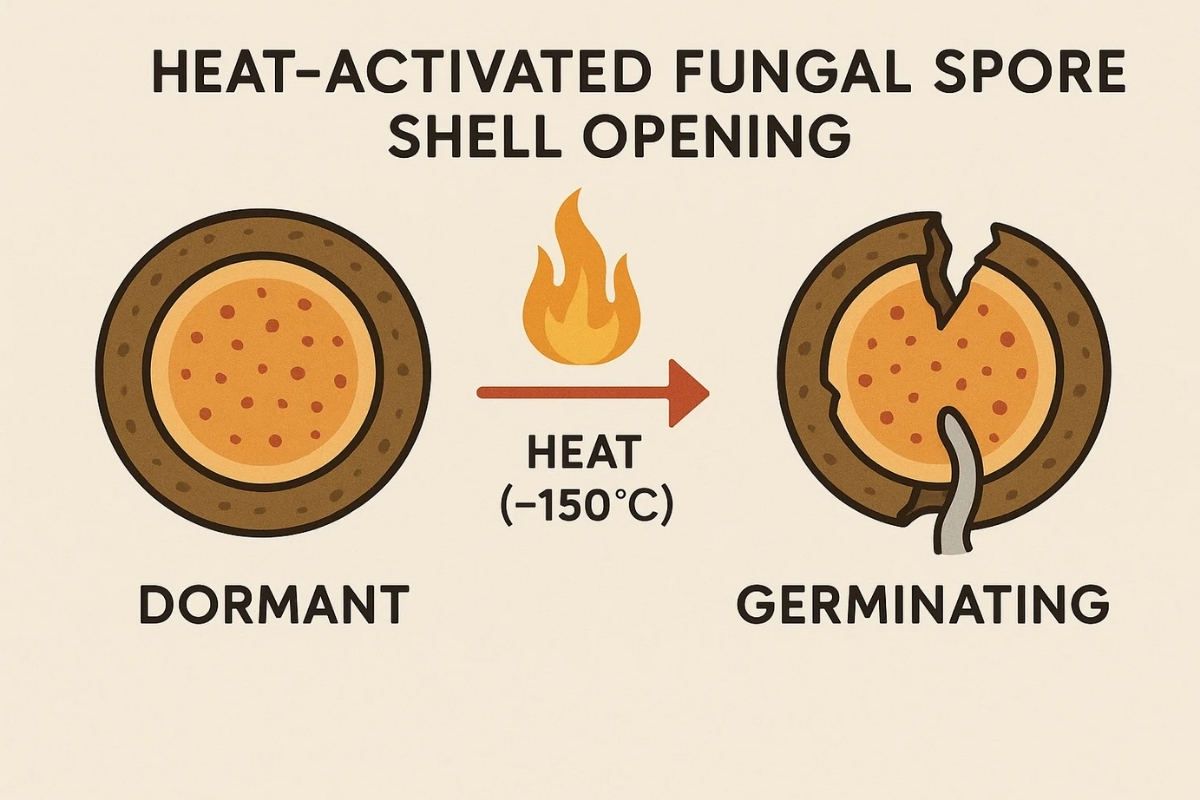
These fungi arenβt just βokayβ with heatβsome require it to germinate.
Theyβve literally encoded fire into their DNA.
Certain species have heat-activated sporesβtough-coated and dormant until exposed to temperatures of 100β200Β°C.
The heat cracks them open, like a password made of flame.
No heat? No party.
No fire? No fruiting.
Itβs not just adaptation.
Itβs genetic ignition.
Fire isnβt their enemy.
Itβs their birthright.
How Mushrooms Heal Burned Forests
π§ͺ Soil Stabilization & Nutrient Cycling
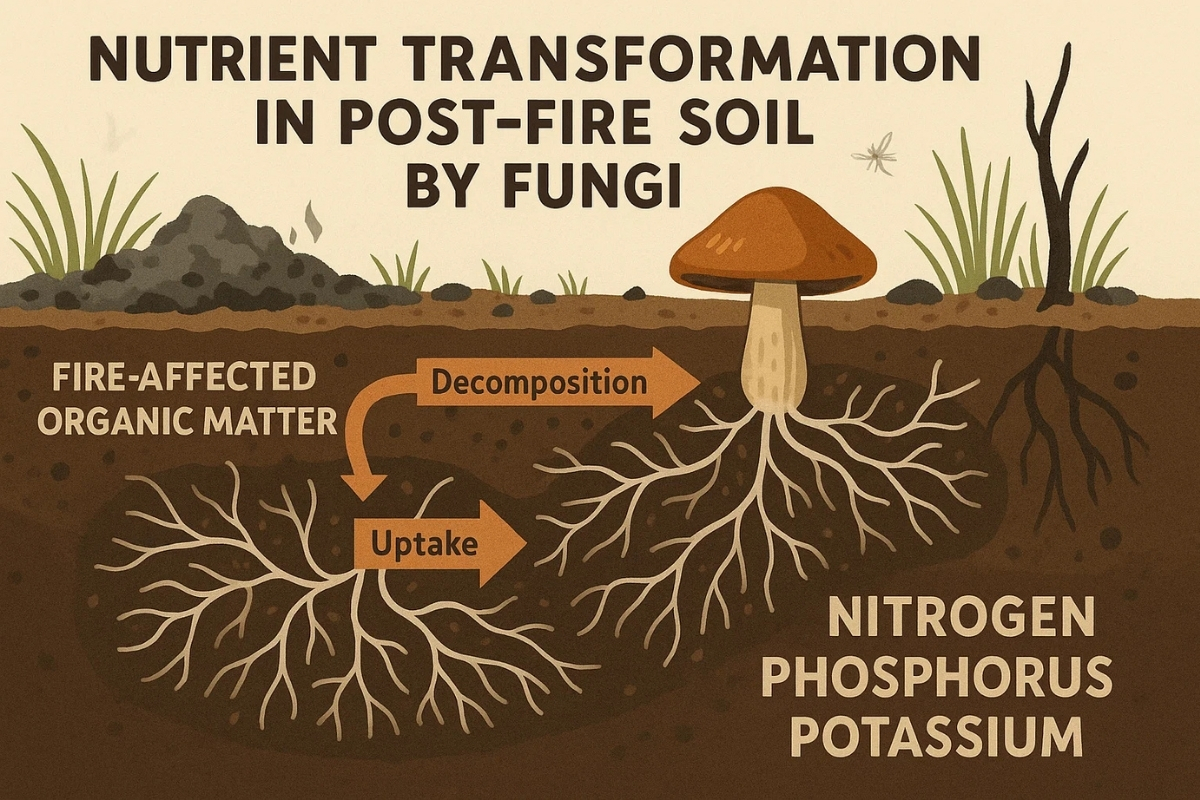
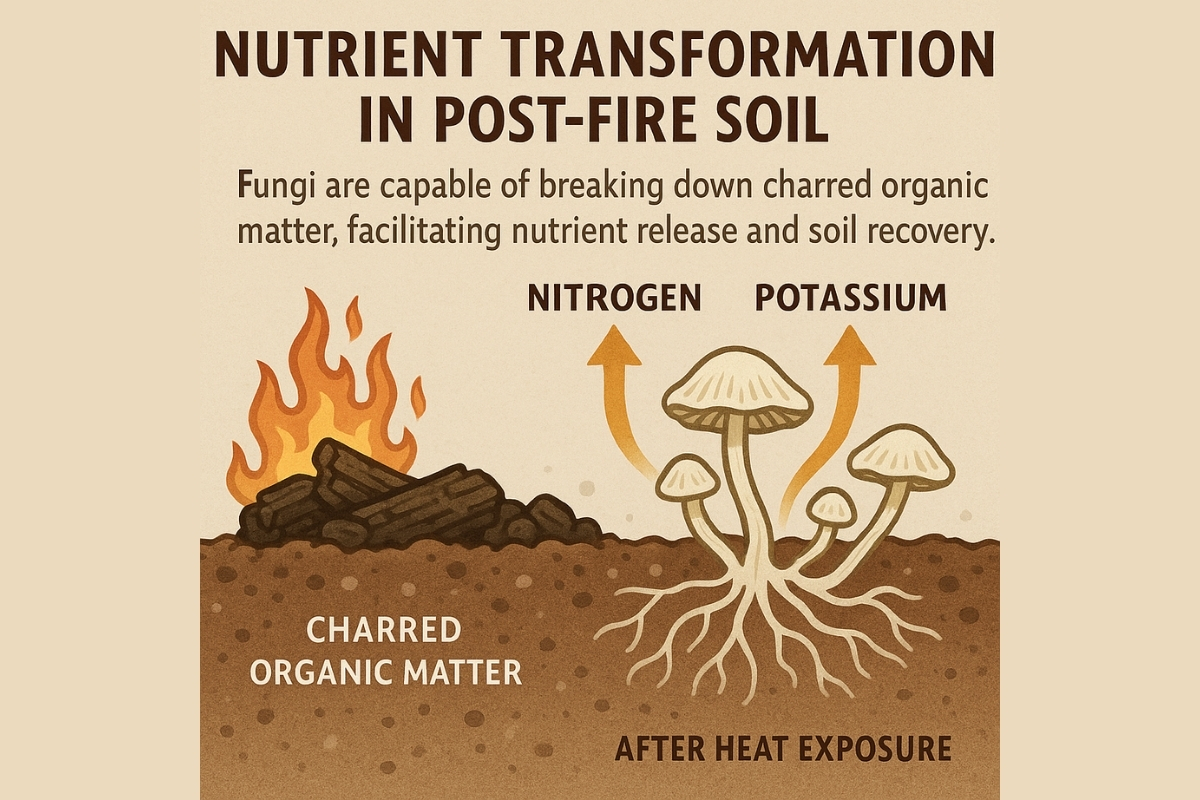
Wildfires donβt just scorch the treesβthey scorch the soil. The heat vaporizes organic matter, weakens root structures, and leaves behind a brittle crust prone to erosion, runoff, and nutrient collapse. Thatβs where fungi step inβnot as guests, but as infrastructure.
When the rains come, exposed soil is vulnerable to landslides, sediment loss, and sterile washouts. But the arrival of myceliumβthose threadlike hyphal networksβchanges everything. Mycelium behaves like a living net, weaving through soil particles and locking them into place. It’s natureβs post-burn rebar.
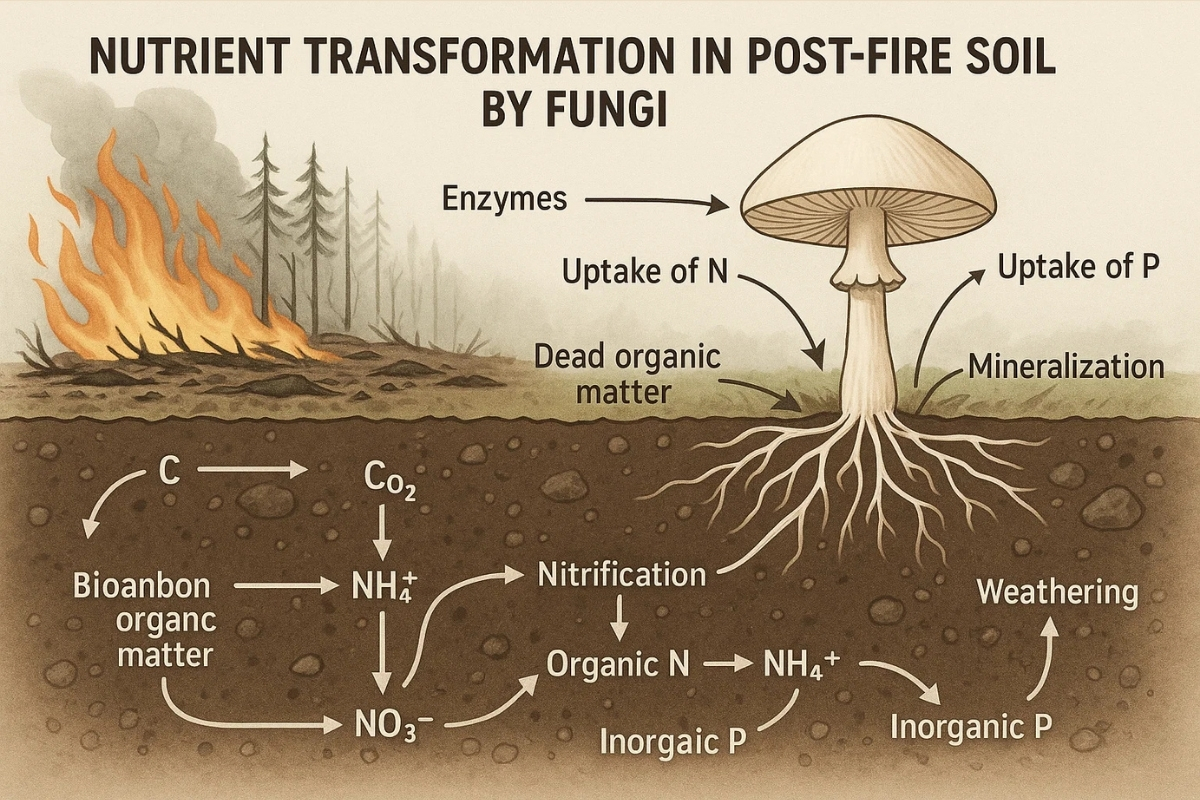
But it doesnβt stop at scaffolding. These fungi are nutrient alchemists, releasing enzymes that break down the charcoal, ash, and leftover organic debris. What looks like ruin to us is actually a biochemical banquet for the spores. They unlock phosphorus, potassium, and carbon from the wreckageβfeeding not just themselves, but the entire microbial and plant community that follows.
As these nutrients cycle through the fungal web, they stimulate microbial return, encourage seed germination, and invite insect activity. The forest floor begins to hum again, not from above, but from within the soil itselfβrevived by the threads of the underworld.
π οΈ Detoxifying the Damage
Fire doesn’t burn clean. In its wake, it leaves behind a chemical cocktailβhydrocarbons, heavy metals, volatile compounds, and toxic residues that even rain canβt wash away. These remnants seep into the soil, halting regrowth and poisoning the very biome that once thrived there.
But fungi? Fungi donβt flinch.
Enter the fire-adapted speciesβpyrophilous fungi that specialize in mycoremediation, the fungal art of breaking down toxicity. These organisms deploy powerful enzymes and acids that digest dangerous compounds into less harmful forms. Hydrocarbons are converted into simpler molecules. Metals are absorbed or immobilized. Even lingering charcoal is slowly deconstructed, turned into stable carbon that feeds rather than fouls.
Species like Pyronema omphalodes and Ascobolus carbonarius donβt just grow in these post-apocalyptic soilsβthey engineer their recovery. While humans would call in hazardous waste teams, the fungi send spores and let enzymes do the rest.
And the best part? They do it silently. No machines. No dump trucks. Just the ancient biochemical algorithms of the Grand Cosmic Mycelial Network, working molecule by molecule to un-poison the Earth.
π± Partners in Rebirth
Once the soil is stabilized and the toxins broken down, itβs time for the forest to live again. But trees donβt grow in isolation. They need allies. Enter the mycorrhizal fungiβthe true soulmates of the plant kingdom.
These underground fungi form symbiotic relationships with tree and plant roots, wrapping around them or weaving inside them like a bio-spiritual handshake. After a fire, many of these fungi lie dormant in the soil, waiting for the first root tips to sprout from scorched seeds or surviving stumps. When they do, the mycorrhizal network relinks instantly.
What follows is nothing short of magic: the fungi supply the young roots with water, phosphorus, and minerals scavenged from the ash. In return, the trees offer up sugars created through photosynthesis. Itβs a mycelial barter system, built on trust, mutual benefit, and 450 million years of co-evolution.
This underground economy is the engine of reforestation. Without these fungal alliances, most trees would fail to thrive in post-fire conditions. With them, the forest doesn’t just come backβit comes back stronger, more diverse, and more interconnected than before.
π Timeline of Regrowth
Week 1: The burn is still fresh. Ash clings to the soil, and blackened bark peels from tree skeletons. But already, Pyronema omphalodes is streaking the ground in vivid neon pinks and orangesβthe first myco-colonizers claiming the wasteland.
Week 4: Fruiting bodies begin to eruptβmorels in the shade of charred trunks, Ascobolus tucked into fire-dusted dung. The spore cycle resumes, and insects begin to return, feeding, nesting, living.
Months 2β3: The soil is now threaded with mycelium. Microbial activity stabilizes, and the first seedlings crack open. The ecosystem breathes. Fungi trade nutrients. Bacteria rebuild balance. The hum returns.
Months 6β12: Root systems expand, tethered to fungal networks. New saplings rise. Grasses return. Moss regrows. Mycorrhizal partners link across the forest floor. The biome isnβt healedβbut it’s healing.
And that healing began with spores.
Because long after the fire crews are gone and the headlines fade, the fungi are still thereβquietly coordinating the comeback.
Ready to ignite the finale?
Fungi, Fire, and the Future of Climate Recovery
π Climate-Driven Firestorms: A New Era of Flame
As global temperatures climb, fire has become more than a seasonal threatβitβs a year-round consequence. Mega-fires, fire tornadoes, scorched deserts-turned-forests-turned-deserts again… weβre living in the Age of Combustion.
And yet, in this inferno era, fungi may offer hope buried just beneath the ash.
Imagine forests pre-inoculated with fungal fire chasersβspecies specially chosen to stabilize the soil, detoxify the aftermath, and support tree regrowth before the flames even arrive.
This isnβt sci-fi. Itβs spore-sci.
The idea? Treat fungi like ecological fire marshalsβembedded in ecosystems, lying dormant until called into action by smoke, heat, and collapse.
They’re already doing this naturally. But what if we just… helped them scale?
π§ Smart Forests with Fungal Failsafes
Ecologists, permaculturists, and daring citizen mycologists are already engineering resilienceβplanting specific fungi like Pleurotus ostreatus (oyster mushrooms), Rhizopogon, or fire-loving Pyronema in fire-prone zones across the globe.
The idea is simple:
Create “fungal buffers” that can:
Stabilize soil post-burn
Degrade toxins rapidly
Nourish regrowth before it even starts
These fire-buffer fungi act as living insurance policies, growing invisibly alongside the forest, ready to activate the moment a burn occurs.
Instead of monocultures and bare slopes, these future forests will be laced with intelligent, spore-rich safety netsβa living system designed not just to survive collapse, but to accelerate healing when it comes.
Imagine a world where fungal foresight is built into forest designβnot as an afterthought, but as a foundational layer of ecosystem strategy.
π§ͺ Bioengineering Mycorestoration Kits
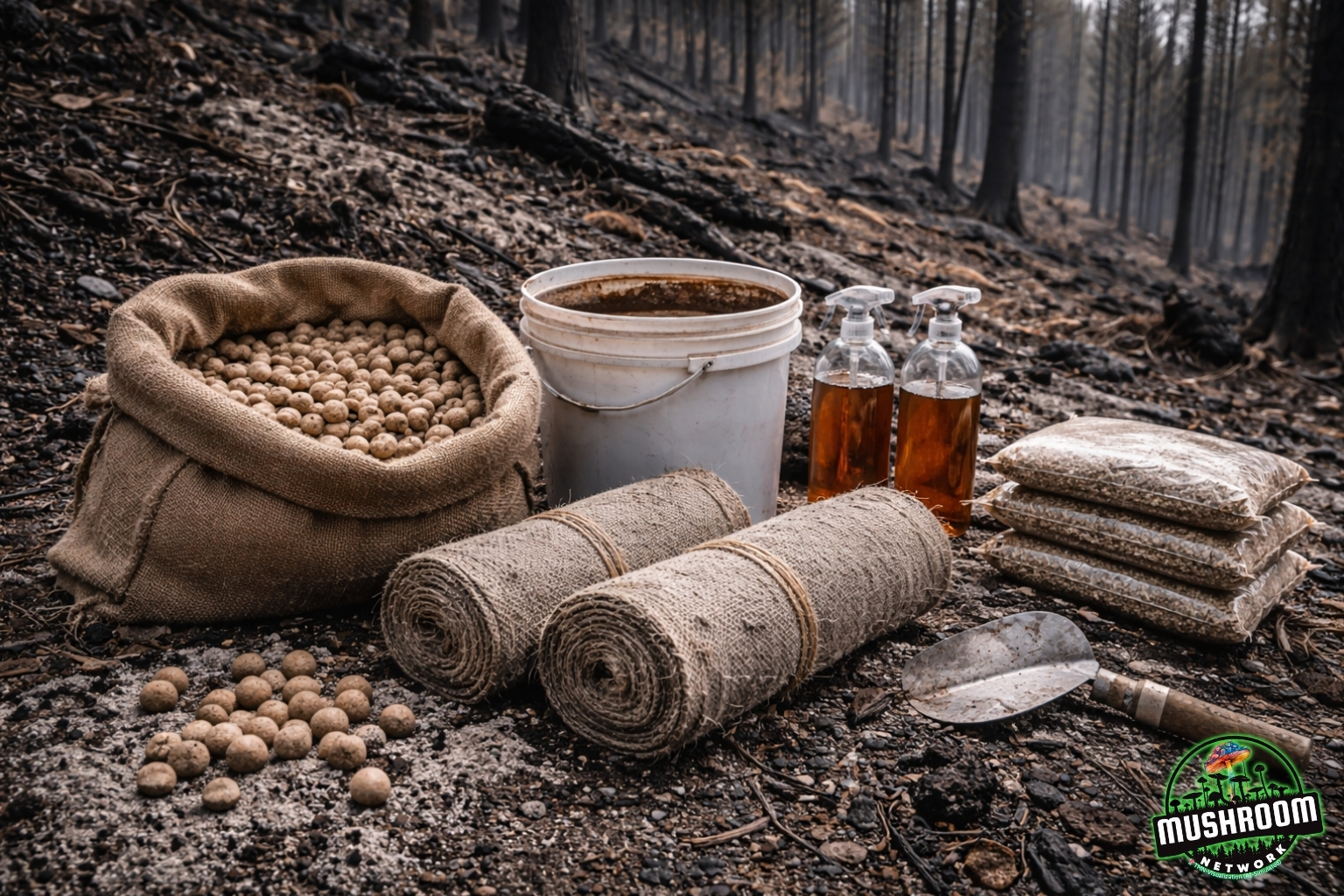
Scientists and biohacker collectives are now developing what could best be described as Mycelial First-Aid Kitsβmodular, scalable tools to deploy in disaster zones post-fire.
These include:
Spore-infused clay pellets β Easy to transport, even easier to scatter across a burn zone
Fungal compost teas β Liquid microbial infusions that bring dead soil back to life
Mycelial mats β Pre-grown networks laid down like bandaids across scorched land
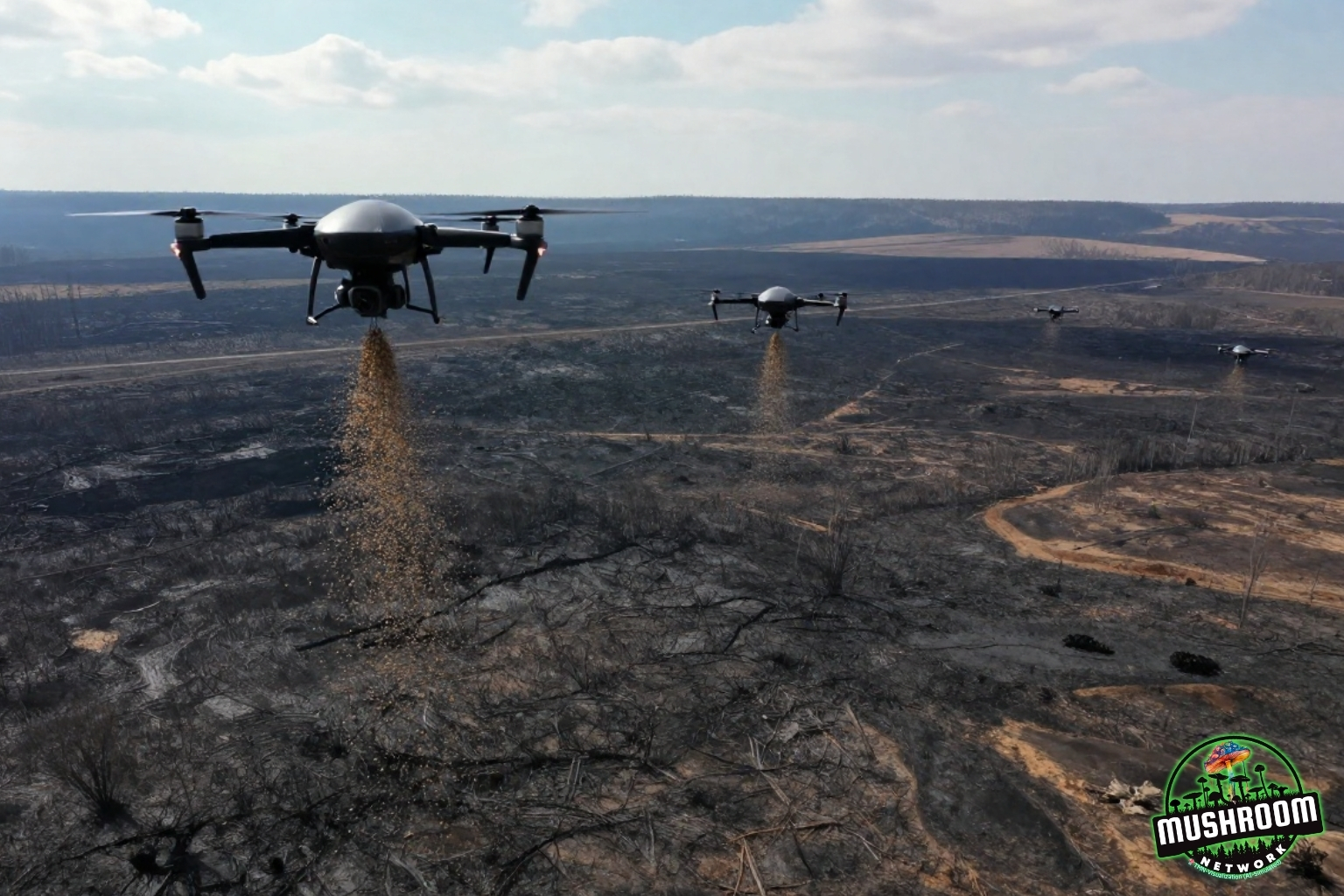
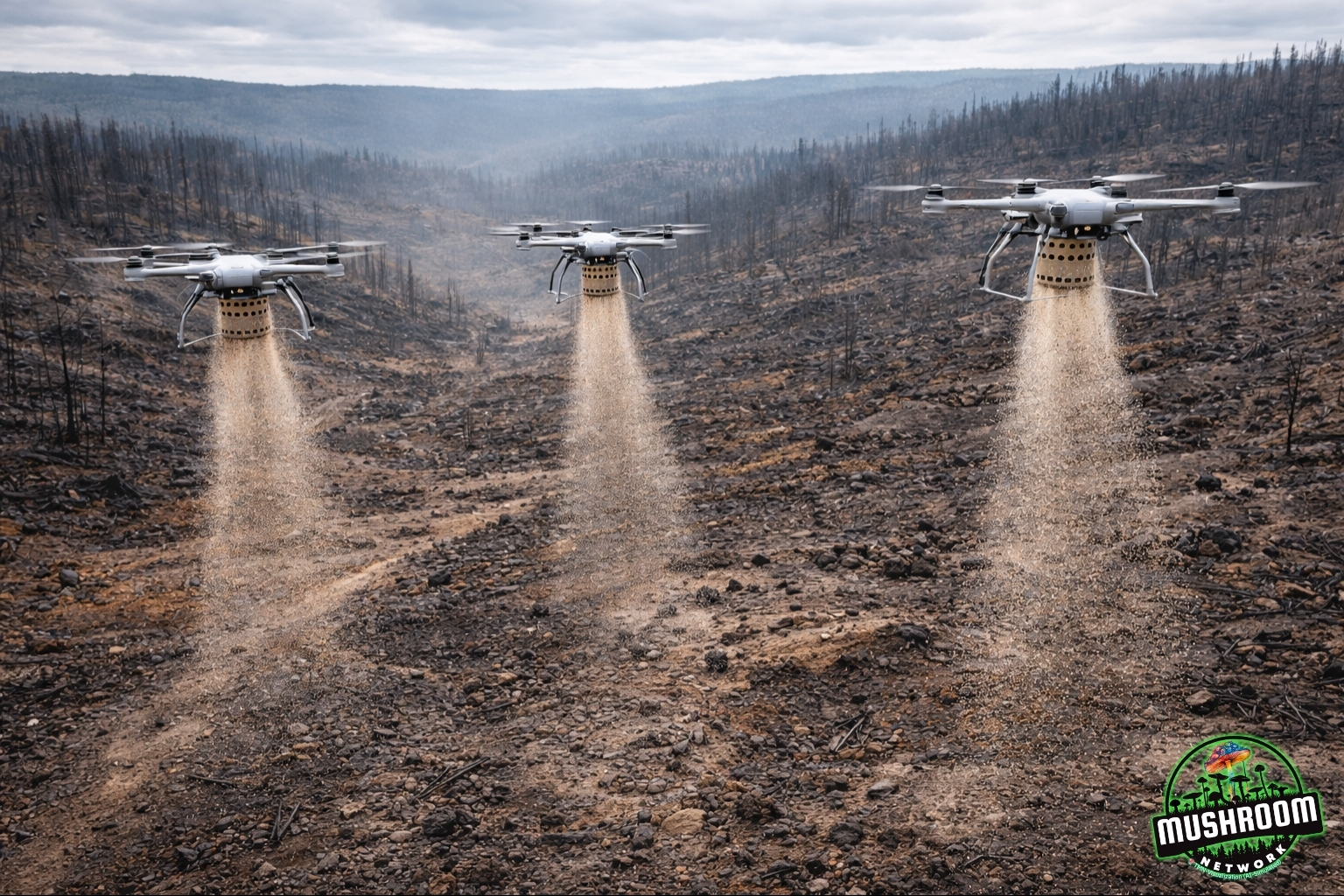
Drone-assisted spore bombing β Thatβs right. Bio-drones dropping eco-payloads of fungal life across acres of blackened wilderness
Itβs not just triage. Itβs bioengineering with intention.
A kind of eco-surgery where spores stitch the wounds of the Earth faster than nature alone could manage.
The best part?
Fungi donβt need batteries.
Just moisture. Darkness. Time.
And a little trust.
π Cosmic Implications: Terraforming by Torchlight
Letβs pan outβway out.
If fungi can heal Earthβs burnsβ¦ what might they do on other planets?
Picture this:
Terraforming Mars with radiation-eating melanized fungi that stabilize regolith and seed future soil
Greening lunar domes using fast-growing mycorrhizal species that support oxygen-producing lichen
Fire-activated spores used as timed terraforming agents, triggered by atmospheric shifts or heat pulses on exoplanets
Fire isnβt just destruction. Itβs ignitionβand spores, as weβve learned, love a good signal.
Weβre not just talking planetary regeneration. Weβre talking fungal architecture woven into the blueprint of galactic colonization.
Because where fire goes, fungi follow.
Not to mourn the loss.
But to build what comes next.
π MycoTip the Network! π
themushroomnetwork@vipsats.app
π Myco-Conclusion: The Fire Burnsβbut the Fungi Return like the Phoenix
Fire may look like an endingβbut to the fungi, itβs an invitation.
Where others see ruin, they see opportunity.
Where the forest collapses into ash, they lace the soil with memory.
While we grieve the crackling loss of green, they get to workβunseen, unshaken, unafraid.
Pyrophilous fungi are more than survivors.
They are phoenix-beings of the soilβrising not with feathers, but with fruiting bodies, enzymes, and spore wisdom born of flame.
They donβt run from fire.
They respond.
They seal the land.
They feed the microbes.
They anchor the roots of what will be.
They whisper to the Earth: βWeβre still here. Letβs begin again.β
And when the rains fall… and the first sapling pushes through the soot…
youβll know:
the spores kept the signal alive.
So if you ever walk through a burned forest and see a tiny mushroom pushing through charcoalβ¦
donβt step over it. Donβt dismiss it.
Salute it.
Because itβs doing more than you know.
Itβs rebuilding a world you havenβt yet seen.
Suggested Myco-Articles For You:
Spores of the Forgotten Realm: A Lost Myco-Verse Transmission
What happens when a Myco-Verse vanishes
Read More...The Mycelial Archives: Do Fungi Remember Every Version of You?
What if mushrooms werenβt just lifeformsβbut librarians? Beneath the soil, mycelial networks donβt just pass nutrientsβthey might also pass you. From past-life imprints to vibrational echoes of decisions you didnβt make, some believe the Mycelial Archives store a record of every version of every being that has ever walked Earth...
Read More...π₯ The Fractal Forest Algorithm: Maitakeβs Genetic Dance with Trees, Sugar, and Survival
Maitake, aka Grifola frondosa, isnβt just a fluffy gourmetβit’s a forest-born algorithm tuning blood sugar through fractal-coded polysaccharides. Deep within its tree-dwelling genetics lie SX- and D-Fractionsβcompounds that can modulate insulin response like a biological DJ. But Maitakeβs growth pattern, too, follows hidden forest codes: a genetic fractal geometry that...
Read More...The Mushroom That Ate PlasticβAnd Other Biotech Shroom Revelations
The Mushroom That Ate PlasticβAnd Other Biotech Shroom Revelations Some mushrooms feed on wood. Some feed on dead bugs. This one craves plastic. Start Your SporeDive π Youβve heard of composting. Maybe even of mycoremediation. But did you know some mushrooms eat plastic? Thatβs not a sci-fi conceptβitβs real, and...
Read More...Myco-Article v1.0.2
How sporetacular was this post?
Tap a star to send your spores of approval (or helpful feedback!)
Oh no! The spores missed their markβ¦
Letβs co-create a sporetacular post together!
Share your wisdomβhow can we make this more Cosmic?