🌿 Hopping Back from the Brink: Frogs Beat the Chytrid Curse in Sequoia–Kings Canyon

For decades, chytrid fungus (Bd)
The Network That Connects Us All!
The study of fungi’s role in ecosystems and healing the planet. Earth’s underground doctors and recyclers.

For decades, chytrid fungus (Bd)

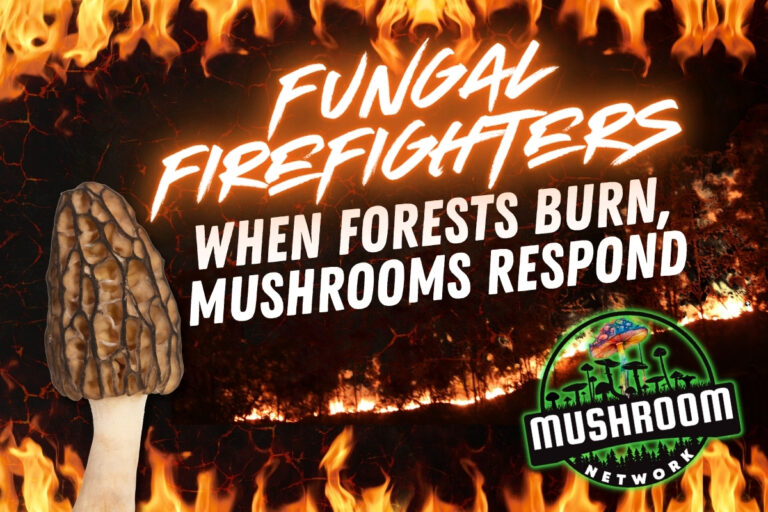
Mushrooms are the medics of the scorched earth. Fire is nature’s reset button—but it doesn’t end with charred stumps and silence. Beneath the ash, fungi rise first. They don’t just survive wildfires—they thrive in the aftermath, stabilizing soil, detoxifying the land, feeding regrowth, and literally stitching the forest back together. These are the unsung fungal firefighters of the ecosystem—Pyrophilous fungi—and they are as magical as they are mycelial. From the burnt bones of the forest, a new world is born—one spore at a time.

You pin a butterfly. You seal a jar. You mount a skull.Congratulations—you’ve just paused a story, not ended it.

There is a fungus in the forest right now solving a problem you would struggle to describe, let alone fix.

Somewhere beneath your feet, a fungus has already adjusted to your presence.

Every mushroom carries a microscopic entourage—spores, dust, and debris from the environment it calls home. Now, scientists are learning to read these invisible signatures like barcodes, linking a mushroom (or anything it’s touched) back to its exact origin. From busting truffle fraud to proving crop theft in court, forensic mycology is moving from niche lab work to a trusted investigative tool. And in the Grand Cosmic Mycelial Network, spores don’t just grow—they remember.

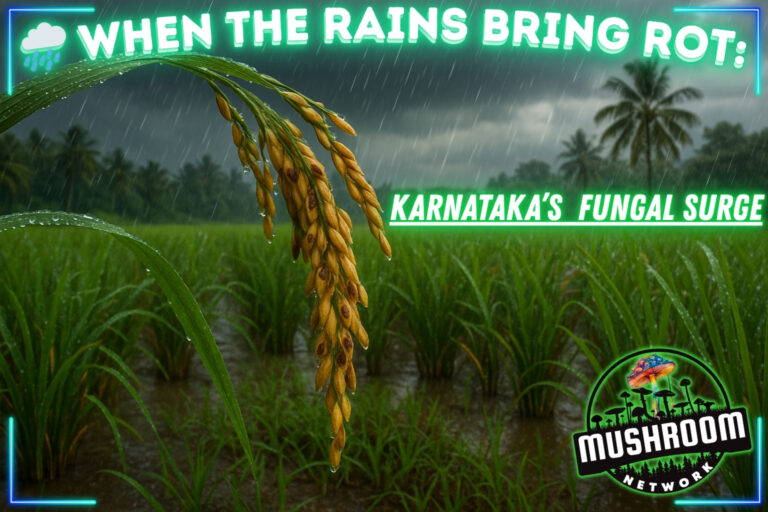
The monsoon—India’s seasonal lifeline—has a spore-laced shadow. In Karnataka, early rains have triggered a surge in crop infections: rice blast, Phyllosticta leaf spots, Colletotrichum blights, and the dreaded Phytophthora fruit rot on arecanut. Warmth and humidity are giving fungi the perfect lab conditions to flourish—except this lab is an entire countryside. Farmers are scrambling with fungicides, drainage tricks, and time-tested cultural practices to keep fields from collapsing into a mushy ruin. This isn’t just weather—it’s a fungal siege.

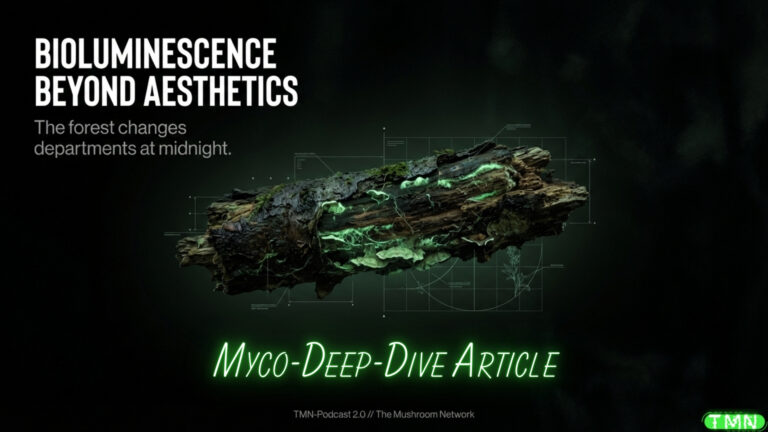
At night, parts of the forest don’t go dark — they glow. Bioluminescent fungi emit cold green light through a highly efficient chemical reaction that may function as both metabolic detox and ecological signaling. What looks like woodland ambiance might actually be evolutionary strategy. And once you realize nature doesn’t waste energy on aesthetics, the glow stops being magical and starts being deeply suspicious.

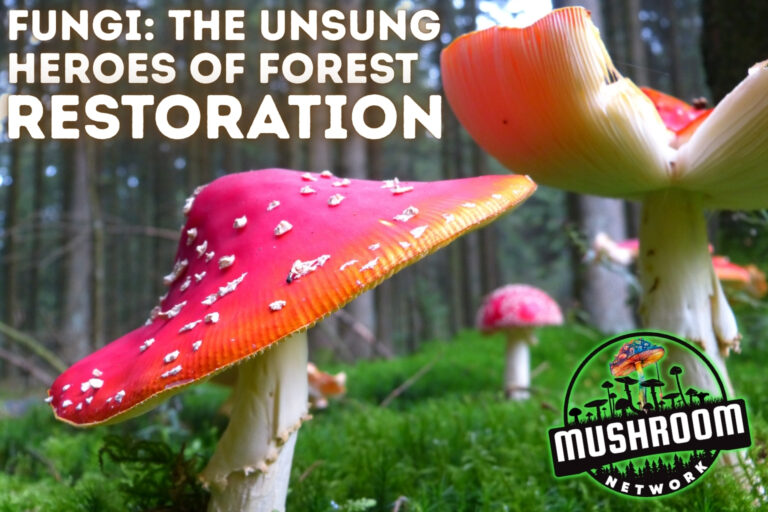
Forget capes and spandex—the real superheroes of forest restoration wear hyphae. In Scotland, scientists are mapping the underground fungal web that keeps trees alive and entire ecosystems humming. With less than 1% of Britain’s ancient hazelwoods left, the Society for the Protection of Underground Networks (SPUN) is on a spore-fueled mission to restore life through the ultimate symbiotic alliance: tree + fungus. Turns out the future of forests depends on the tiniest architects in the dirt.

They look like sunshine on a log and taste like they were designed by a Michelin chef. But Michigan’s Department of Natural Resources

A rare fungal killer—Syncephalastrum oblongispora—has just claimed its first documented life in Sub-Saharan Africa. The victim: an HIV-positive patient whose weakened immune defenses were no match for this aggressive mucormycete. This isn’t just a tragic case—it’s a cosmic alarm bell that fungi don’t play favorites. They adapt. They invade. They kill. Myco-Patrons, the spores are reminding us: vigilance is survival.

What if your immune system had a fungal co-pilot? 🍄 The shiitake mushroom, beloved in stir-fry, might also be whispering genetic upgrades through a compound called lentinan—tweaking T-cells and flipping anti-tumor gene switches like a cellular DJ. In this deeply sporetacular Myco-Article, we crack open the Shiitake Code and explore its role as an immune symphony conductor, ancient breeder’s masterpiece, and tree-whispering forest hacker. Tap in, Myco-Wanderers—your genome may already be listening.