🧬 Genetic Hijacker: How Cordyceps Rewrites Insect DNA—And What That Could Mean for Us
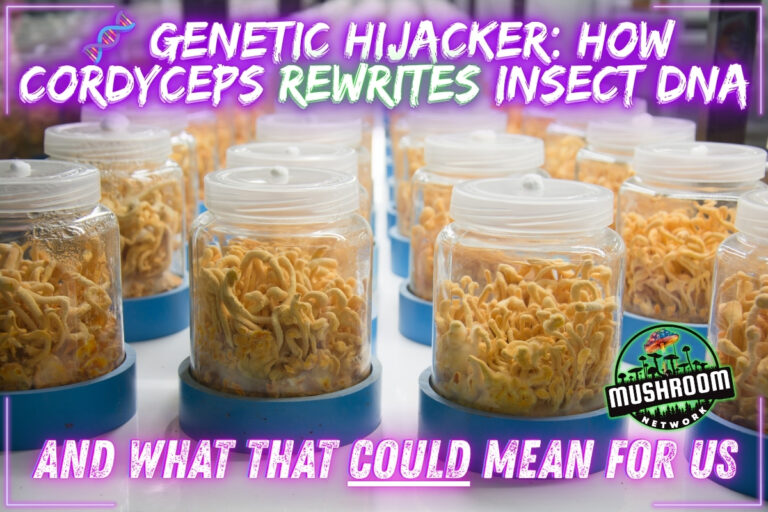
You’ve seen the zombie ant memes. Now meet the real Cordyceps militaris—the fungus that doesn’t just possess its prey but reprograms their genetic destiny

The Network That Connects Us All!
Deep-dive articles on mycology, species profiles, taxonomy, ecology.
You’ve seen the zombie ant memes. Now meet the real Cordyceps militaris—the fungus that doesn’t just possess its prey but reprograms their genetic destiny
Nature documentaries lied to you. Not maliciously. Just… dramatically. Because if you actually look closely at how life works, it’s less claws-and-chaos and more spreadsheets-and-cooperation, with fungi quietly doing logistics in the background. This is the story of the underground networks that make forests function, bodies survive, and ecosystems outlive extinctions. Read this if you enjoy having your assumptions gently dismantled and replaced with something smarter.
Move over, astronauts—fungi might be the real stars of space travel. In multiple out-of-this-world experiments, spores have survived freezing cold, scorching UV, and cosmic radiation without
Philadelphia isn’t just slinging cheesesteaks anymore—it’s slinging spores. With mushroom food and beverage sales up 450% since 2021, functional fungi are taking over the city’s plates, drinks, and snacks. From Kennett Square’s global dominance to Philly’s own Mycopolitan basement farm, the mushroom revolution is both urban and cosmic. And this September, a festival of fungi is bringing the city together under one canopy of caps.
Is your brain running on outdated firmware? 🧠🍄 Say hello to Lion’s Mane—a mushroom packed with compounds that don’t just support
Somewhere below your toes, a network older than human speech pulses with life. Trees aren’t standing still—they’re texting each other using mushrooms as messengers. Welcome to the Wood Wide Web: an underground internet powered by mycelium, where forests share food, warnings, even emotional support. This isn’t fantasy. It’s fungal science with a Wi-Fi twist. Plug into the Grand Cosmic Mycelial Network and prepare to have your mind rooted
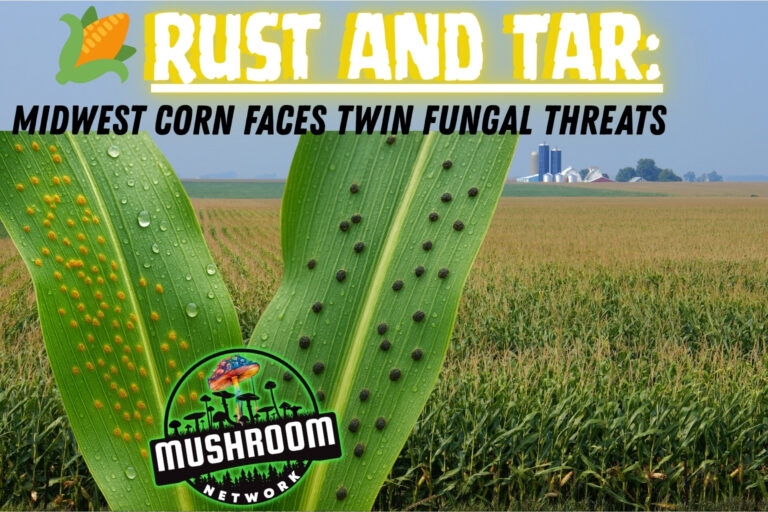
The cornfields of Missouri and Illinois are once again in fungal crosshairs. Southern rust—fast, orange, and ruthless—teams up with tar spot’s stealthy black lesions to threaten millions of bushels. Together, they can strip photosynthetic power, shut down grain fill, and leave farmers staring at half-empty combines. Integrated defense—early scouting, resistant hybrids, and precision fungicide timing—is the only way to keep the harvest intact. Ignore the signs, and the spores will write the ending for you.
Mushrooms are the medics of the scorched earth. Fire is nature’s reset button—but it doesn’t end with charred stumps and silence. Beneath the ash, fungi rise first. They don’t just survive wildfires—they thrive in the aftermath, stabilizing soil, detoxifying the land, feeding regrowth, and literally stitching the forest back together. These are the unsung fungal firefighters of the ecosystem—Pyrophilous fungi—and they are as magical as they are mycelial. From the burnt bones of the forest, a new world is born—one spore at a time.
What if mushrooms weren’t just lifeforms—but librarians? Beneath the soil, mycelial networks don’t just pass nutrients—they might also pass you. From past-life imprints to vibrational echoes of decisions you didn’t make, some believe the Mycelial Archives store a record of every version of every being that has ever walked Earth (and beyond). This is more than reincarnation. This is fungal soul-mirroring—and yes, the mushrooms might remember you better than you do.
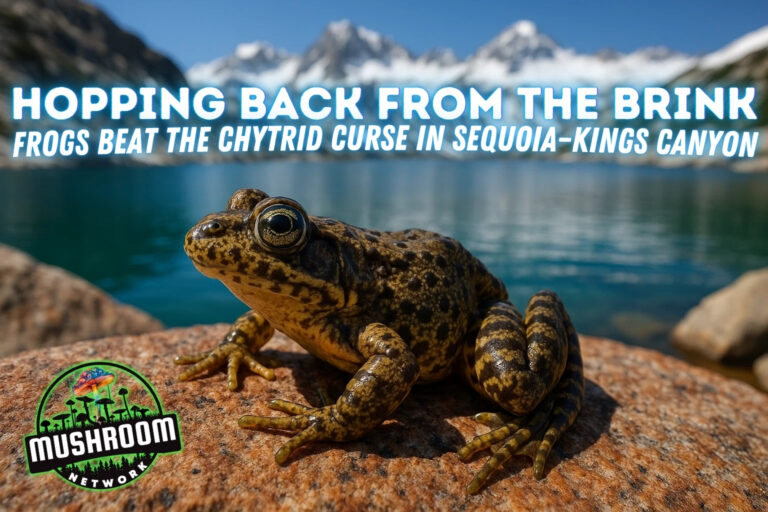
For decades, chytrid fungus (Bd)
Is the forest… conscious
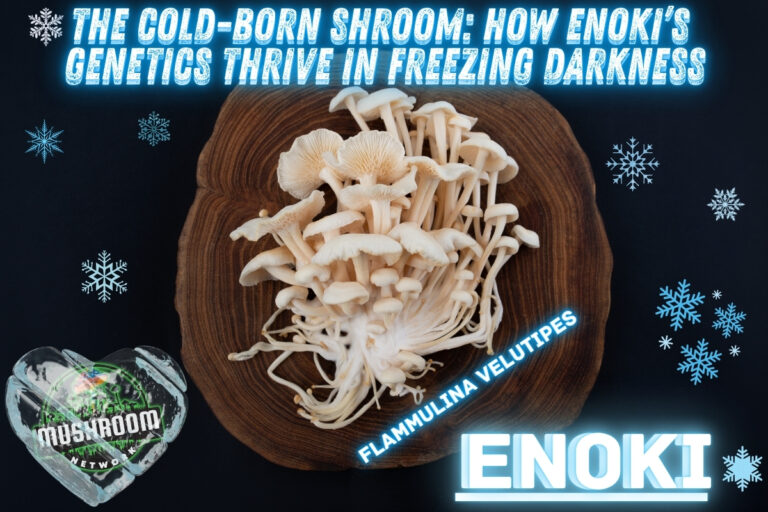
Buckle up, Myco-Wanderer. We’re diving into the frost-coded fungal genetics of Enoki—yes, that long, noodle-like mushroom in your ramen. But don’t let its skinny frame fool you. Beneath that ghost-white stem is a mutant power born from cold darkness, lab manipulation, and cell-apoptosis wizardry. Learn how Enoki’s genes adapted to thrive where other fungi freeze, and why researchers are obsessed with its potential to ice cancer cells from the inside out.
