🌿 Hopping Back from the Brink: Frogs Beat the Chytrid Curse in Sequoia–Kings Canyon
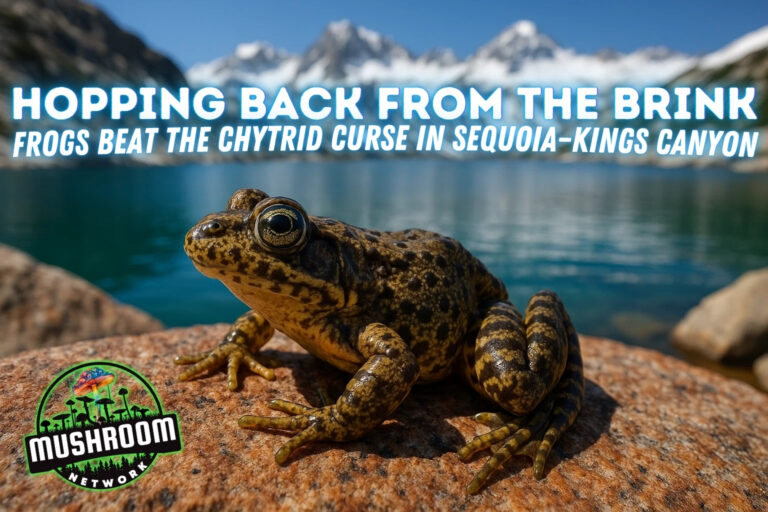
For decades, chytrid fungus (Bd)

The Network That Connects Us All!
🌈 Myco-Articles: The Infinite Archive
Welcome to the living, glowing library of The Mushroom Network—a spore-charged archive where wisdom, humor, and cosmic discovery collide. Every Myco-Article is a portal to a different universe: from lore and fieldcraft, to memes, wellness, science, and spiritual frontiers.
Which path will you choose?
Philosophy & Lore
Cultivation & DIY
Impact & Biotech
Food & Alchemy
Foraging & Fieldcraft
Art & Visuals
Humor & Memes
News & Breakthroughs
Guides & Resources
Health & Wellness
Community & Voices
Science & Discovery
Psychedelics & Mind
Spirituality & Mystical
For decades, chytrid fungus (Bd)

You’ve heard of plants responding to music. But what if mushrooms—the mycelial masters of the underground
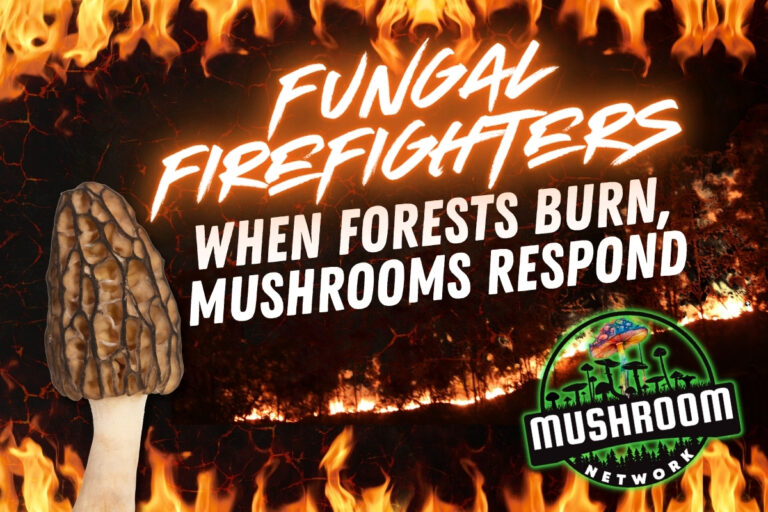
Mushrooms are the medics of the scorched earth. Fire is nature’s reset button—but it doesn’t end with charred stumps and silence. Beneath the ash, fungi rise first. They don’t just survive wildfires—they thrive in the aftermath, stabilizing soil, detoxifying the land, feeding regrowth, and literally stitching the forest back together. These are the unsung fungal firefighters of the ecosystem—Pyrophilous fungi—and they are as magical as they are mycelial. From the burnt bones of the forest, a new world is born—one spore at a time.
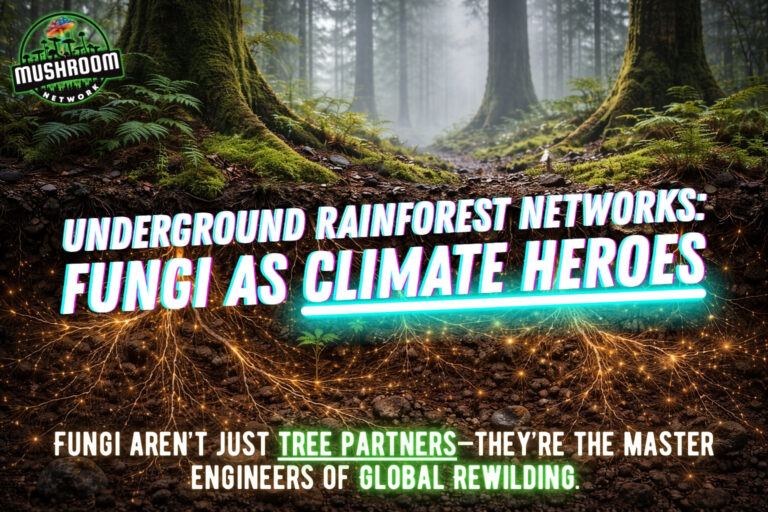
Hidden beneath our feet are the fungal freeways that could rewrite Earth’s climate story. In Scotland’s Ballachuan Hazelwood, scientists from SPUN are sequencing fungal DNA to reveal the networks that let seedlings thrive and forests recover. This work stretches across the globe—from Colombia to Palmyra Atoll—mapping the Grand Cosmic Mycelial Network as a restoration blueprint. With Britain’s moist climate still ripe for temperate rainforest revival, fungi are stepping up as climate heroes, rebuilding ecosystems one spore at a time.
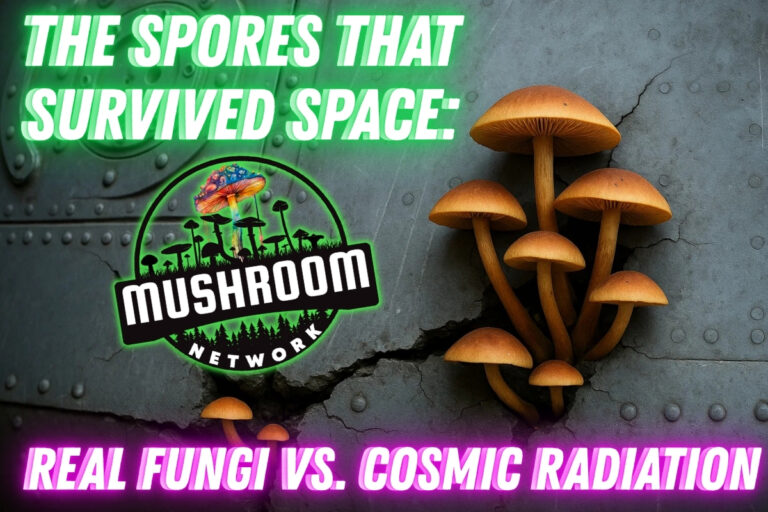
Move over, astronauts—fungi might be the real stars of space travel. In multiple out-of-this-world experiments, spores have survived freezing cold, scorching UV, and cosmic radiation without
Fungi can heal, connect, and sustain—but some species kill. A new almost 23 million USD (£17.9M) initiative led by the University of Dundee, Exeter, and GSK is targeting two lethal fungal pathogens: Cryptococcus neoformans
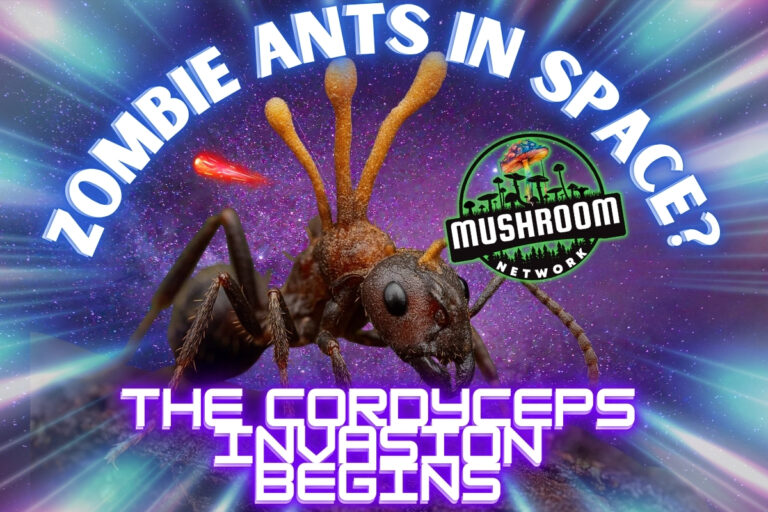
Cordyceps is not your chill adaptogen. It’s a mind-controlling fungal parasite with a flair for drama—and potentially, a future in off-world colonization. This real-life zombie fungus hijacks insect brains, erupts from their bodies, and uses them as mobile spore-launchers. Scientists are exploring its properties for medicine, warfare, and even terraforming. Could Cordyceps be a dark horse pioneer of planetary adaptation? Time to spore-lift the lid on one of Earth’s most terrifying—and fascinating—fungi.
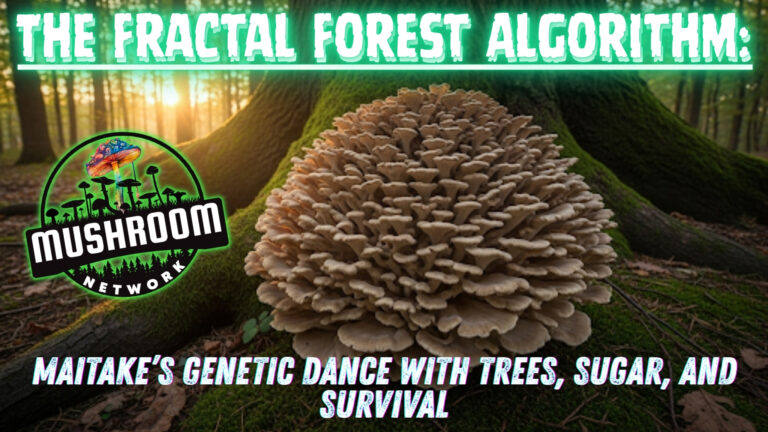
Maitake, aka Grifola frondosa, isn’t just a fluffy gourmet—it’s a forest-born algorithm tuning blood sugar through fractal-coded polysaccharides. Deep within its tree-dwelling genetics lie SX- and D-Fractions—compounds that can modulate insulin response like a biological DJ. But Maitake’s growth pattern, too, follows hidden forest codes: a genetic fractal geometry that mirrors the symbiosis of roots, sugars, and survival. What if this mushroom is showing us how nature thinks?
Every mushroom carries a microscopic entourage—spores, dust, and debris from the environment it calls home. Now, scientists are learning to read these invisible signatures like barcodes, linking a mushroom (or anything it’s touched) back to its exact origin. From busting truffle fraud to proving crop theft in court, forensic mycology is moving from niche lab work to a trusted investigative tool. And in the Grand Cosmic Mycelial Network, spores don’t just grow—they remember.
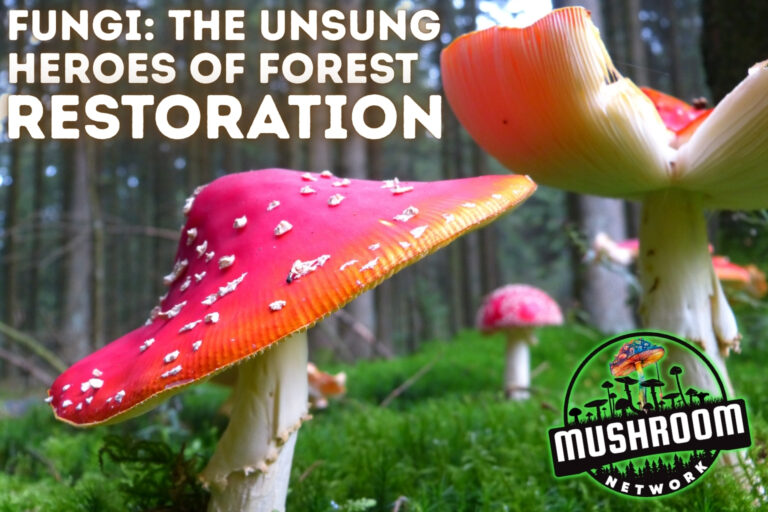
Forget capes and spandex—the real superheroes of forest restoration wear hyphae. In Scotland, scientists are mapping the underground fungal web that keeps trees alive and entire ecosystems humming. With less than 1% of Britain’s ancient hazelwoods left, the Society for the Protection of Underground Networks (SPUN) is on a spore-fueled mission to restore life through the ultimate symbiotic alliance: tree + fungus. Turns out the future of forests depends on the tiniest architects in the dirt.
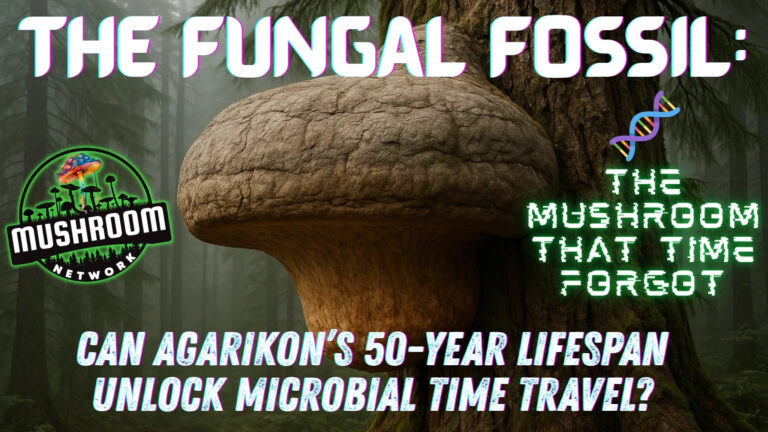
What if the cure to tomorrow’s viral outbreak was written into a mushroom that’s been growing since the ’70s? Enter Agarikon (Fomitopsis officinalis)—the long-living shelf fungus once used to treat plague symptoms and now being researched for its powerful antiviral genetics. From its towering, beehive-like form to its decades-long growth on ancient conifers, Agarikon might just be the fungal equivalent of a microbial time machine. Open the vault.

The Mushroom That Ate Plastic—And Other Biotech Shroom Revelations Some mushrooms feed on wood. Some feed on dead bugs. This one craves plastic. Start Your SporeDive 🌌 You’ve heard of composting. Maybe even of mycoremediation. But did you know some…

