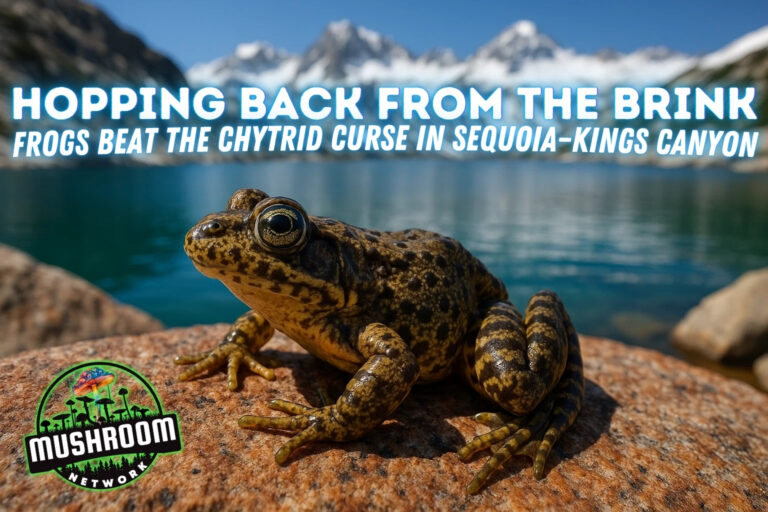
🌿 Hopping Back from the Brink: Frogs Beat the Chytrid Curse in Sequoia–Kings Canyon
For decades, chytrid fungus (Bd)

The Network That Connects Us All!
For decades, chytrid fungus (Bd)
Is the forest… conscious
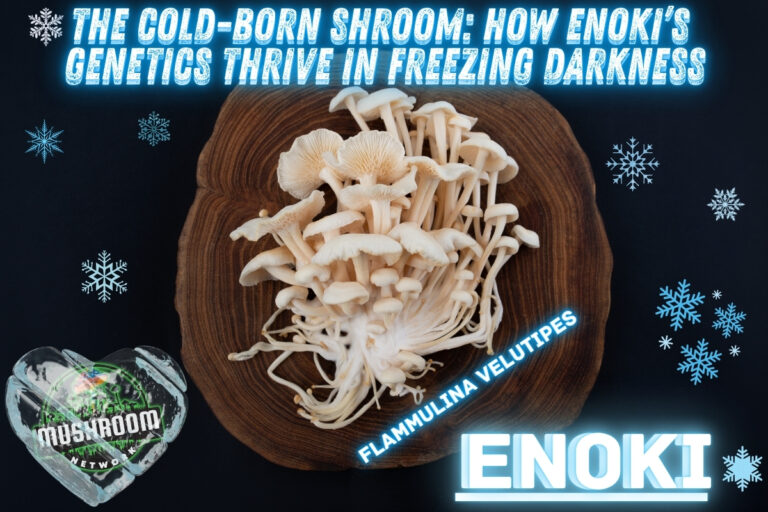
Buckle up, Myco-Wanderer. We’re diving into the frost-coded fungal genetics of Enoki—yes, that long, noodle-like mushroom in your ramen. But don’t let its skinny frame fool you. Beneath that ghost-white stem is a mutant power born from cold darkness, lab manipulation, and cell-apoptosis wizardry. Learn how Enoki’s genes adapted to thrive where other fungi freeze, and why researchers are obsessed with its potential to ice cancer cells from the inside out.
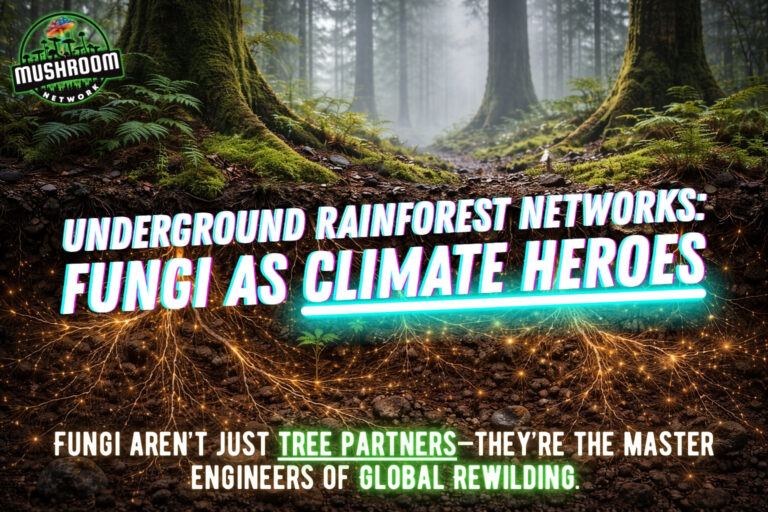
Hidden beneath our feet are the fungal freeways that could rewrite Earth’s climate story. In Scotland’s Ballachuan Hazelwood, scientists from SPUN are sequencing fungal DNA to reveal the networks that let seedlings thrive and forests recover. This work stretches across the globe—from Colombia to Palmyra Atoll—mapping the Grand Cosmic Mycelial Network as a restoration blueprint. With Britain’s moist climate still ripe for temperate rainforest revival, fungi are stepping up as climate heroes, rebuilding ecosystems one spore at a time.
There is a fungus in the forest right now solving a problem you would struggle to describe, let alone fix.
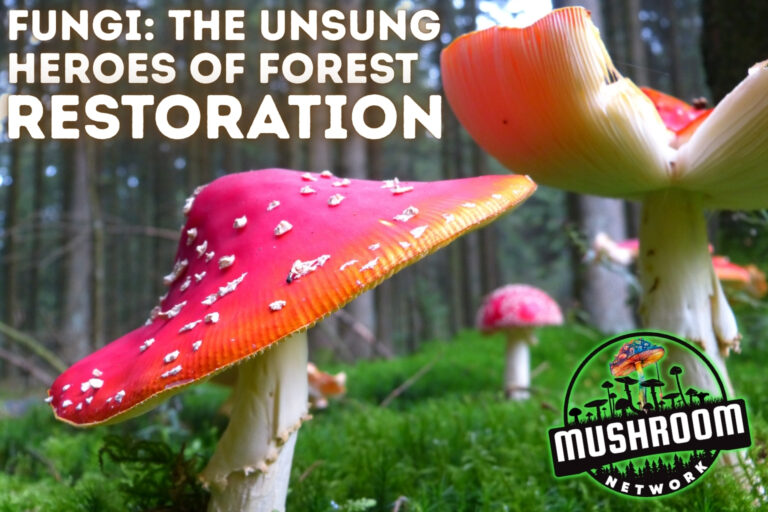
Forget capes and spandex—the real superheroes of forest restoration wear hyphae. In Scotland, scientists are mapping the underground fungal web that keeps trees alive and entire ecosystems humming. With less than 1% of Britain’s ancient hazelwoods left, the Society for the Protection of Underground Networks (SPUN) is on a spore-fueled mission to restore life through the ultimate symbiotic alliance: tree + fungus. Turns out the future of forests depends on the tiniest architects in the dirt.
Fungi can heal, connect, and sustain—but some species kill. A new almost 23 million USD (£17.9M) initiative led by the University of Dundee, Exeter, and GSK is targeting two lethal fungal pathogens: Cryptococcus neoformans
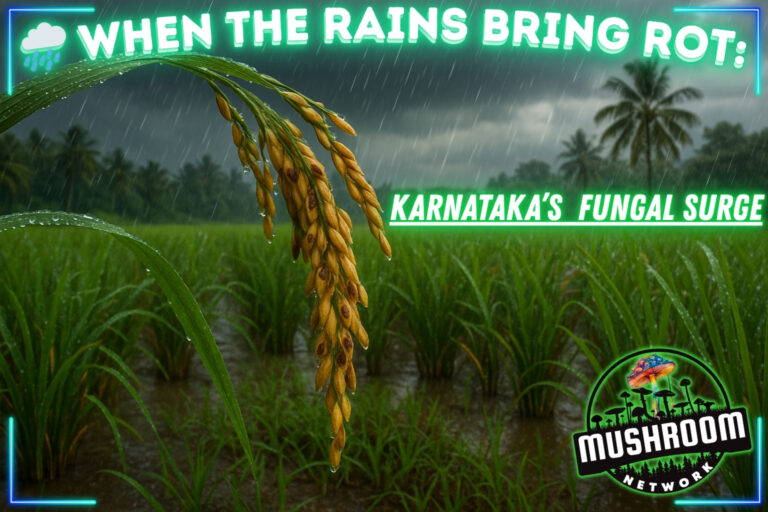
The monsoon—India’s seasonal lifeline—has a spore-laced shadow. In Karnataka, early rains have triggered a surge in crop infections: rice blast, Phyllosticta leaf spots, Colletotrichum blights, and the dreaded Phytophthora fruit rot on arecanut. Warmth and humidity are giving fungi the perfect lab conditions to flourish—except this lab is an entire countryside. Farmers are scrambling with fungicides, drainage tricks, and time-tested cultural practices to keep fields from collapsing into a mushy ruin. This isn’t just weather—it’s a fungal siege.
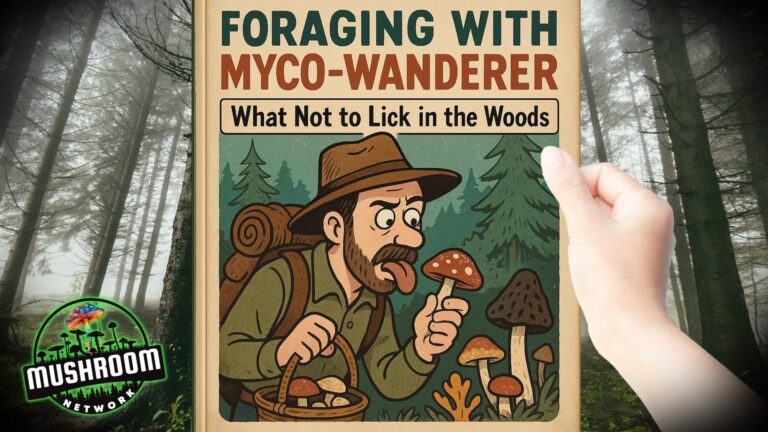
You’re wandering the woods. A cute little mushroom smiles at you like a snack. Should you lick it? NO. This Myco-Wanderer survival article is your ultimate guide to identifying (and not
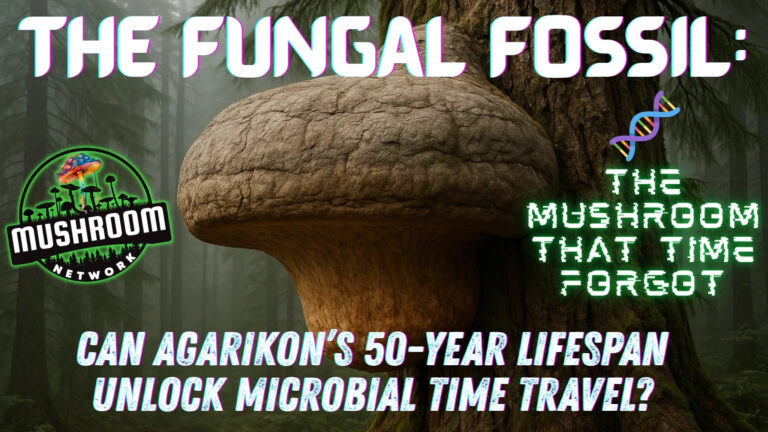
What if the cure to tomorrow’s viral outbreak was written into a mushroom that’s been growing since the ’70s? Enter Agarikon (Fomitopsis officinalis)—the long-living shelf fungus once used to treat plague symptoms and now being researched for its powerful antiviral genetics. From its towering, beehive-like form to its decades-long growth on ancient conifers, Agarikon might just be the fungal equivalent of a microbial time machine. Open the vault.
Somewhere beneath your feet, a fungus has already adjusted to your presence.
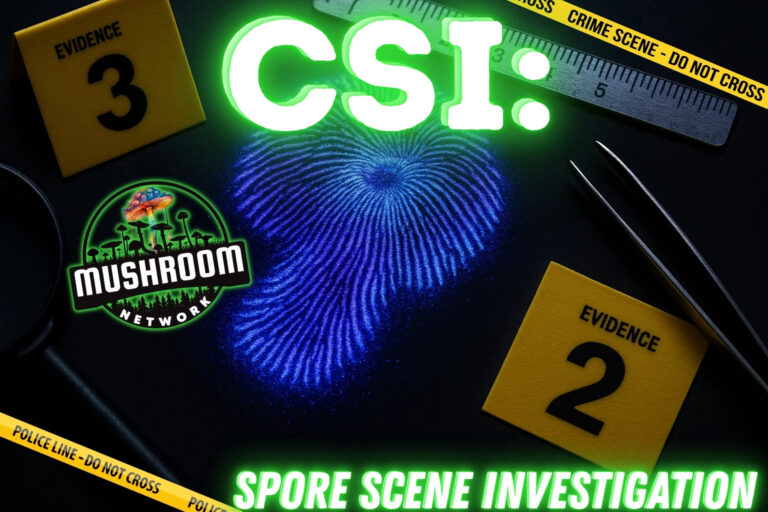
Every mushroom carries a microscopic entourage—spores, dust, and debris from the environment it calls home. Now, scientists are learning to read these invisible signatures like barcodes, linking a mushroom (or anything it’s touched) back to its exact origin. From busting truffle fraud to proving crop theft in court, forensic mycology is moving from niche lab work to a trusted investigative tool. And in the Grand Cosmic Mycelial Network, spores don’t just grow—they remember.
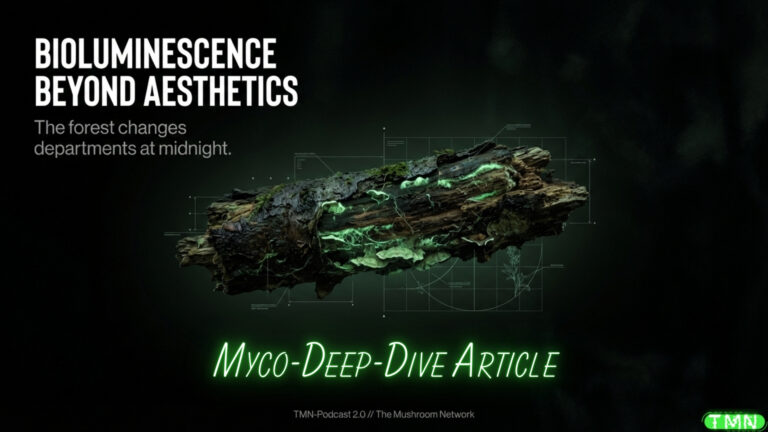
At night, parts of the forest don’t go dark — they glow. Bioluminescent fungi emit cold green light through a highly efficient chemical reaction that may function as both metabolic detox and ecological signaling. What looks like woodland ambiance might actually be evolutionary strategy. And once you realize nature doesn’t waste energy on aesthetics, the glow stops being magical and starts being deeply suspicious.
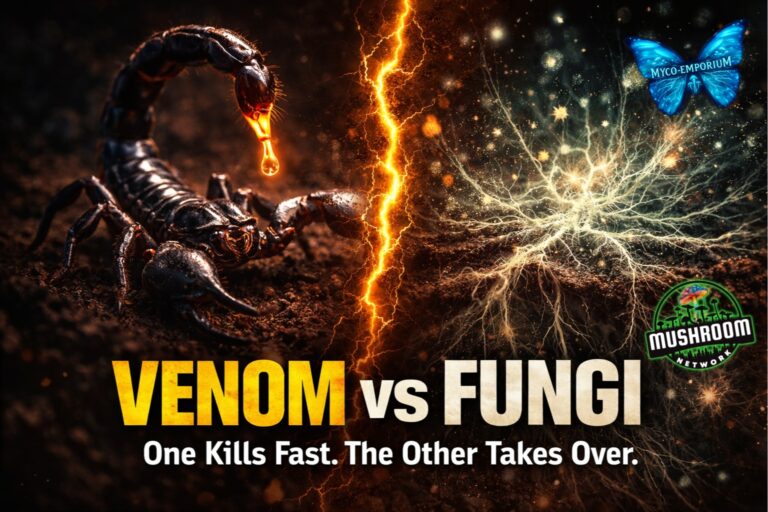
The scorpion strikes fast. Venom floods the body. Muscles seize. Systems collapse.Now imagine something slower… something that doesn’t stab you, doesn’t chase you, doesn’t even bother with the theatrical decency of looking dangerous… but quietly lands on you and starts editing your biology from the inside.
