You Thought Humans Discovered Mushrooms. They’ve Been Studying You.

Somewhere beneath your feet, a fungus has already adjusted to your presence.
The Network That Connects Us All!
The mycelial communication system that allows trees and plants to share nutrients and signals.

Somewhere beneath your feet, a fungus has already adjusted to your presence.

Is the forest… conscious? New science suggests mycelium might store memory, transmit information, and even behave like a biological brain. This spore-stained deep dive explores whether forests are thinking, feeling, and remembering through the Grand Cosmic Mycelial Network. Read at your own risk—your next hike might feel like entering a sentient cathedral.

Nature documentaries lied to you. Not maliciously. Just… dramatically. Because if you actually look closely at how life works, it’s less claws-and-chaos and more spreadsheets-and-cooperation, with fungi quietly doing logistics in the background. This is the story of the underground networks that make forests function, bodies survive, and ecosystems outlive extinctions. Read this if you enjoy having your assumptions gently dismantled and replaced with something smarter.
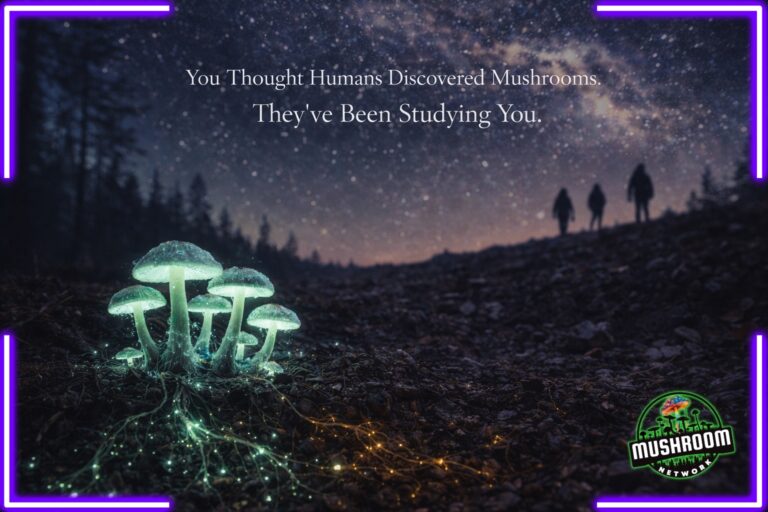
Somewhere below your toes, a network older than human speech pulses with life. Trees aren’t standing still—they’re texting each other using mushrooms as messengers. Welcome to the Wood Wide Web: an underground internet powered by mycelium, where forests share food, warnings, even emotional support. This isn’t fantasy. It’s fungal science with a Wi-Fi twist. Plug into the Grand Cosmic Mycelial Network and prepare to have your mind rooted

Forget capes and spandex—the real superheroes of forest restoration wear hyphae. In Scotland, scientists are mapping the underground fungal web that keeps trees alive and entire ecosystems humming. With less than 1% of Britain’s ancient hazelwoods left, the Society for the Protection of Underground Networks (SPUN) is on a spore-fueled mission to restore life through the ultimate symbiotic alliance: tree + fungus. Turns out the future of forests depends on the tiniest architects in the dirt.