🧬 Genetic Hijacker: How Cordyceps Rewrites Insect DNA—And What That Could Mean for Us
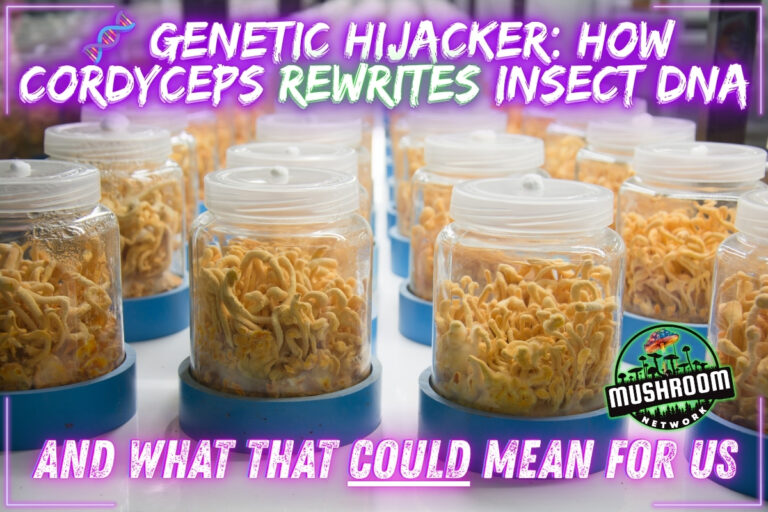
You’ve seen the zombie ant memes. Now meet the real Cordyceps militaris—the fungus that doesn’t just possess its prey but reprograms their genetic destiny

The Network That Connects Us All!
Exploring the decision-making, adaptation, and network behavior of fungal organisms.
You’ve seen the zombie ant memes. Now meet the real Cordyceps militaris—the fungus that doesn’t just possess its prey but reprograms their genetic destiny
Nature documentaries lied to you. Not maliciously. Just… dramatically. Because if you actually look closely at how life works, it’s less claws-and-chaos and more spreadsheets-and-cooperation, with fungi quietly doing logistics in the background. This is the story of the underground networks that make forests function, bodies survive, and ecosystems outlive extinctions. Read this if you enjoy having your assumptions gently dismantled and replaced with something smarter.
What if mushrooms could predict your choices before you made them? Enter the Fungoracle Protocols—a cosmic system of spore-based prophecy, memory recursion, and resonance alignment used by the most advanced fungal civilizations in the Myco-Verses. This isn’t metaphor. It’s spore-science meets quantum fate-tracking. Whether encoded in caplight, dream transmission, or your own DNA, the fungal realms may already know your next move. The question is: do you want to know it too?
What happens when a Myco-Verse vanishes
What if mushrooms weren’t just lifeforms—but librarians? Beneath the soil, mycelial networks don’t just pass nutrients—they might also pass you. From past-life imprints to vibrational echoes of decisions you didn’t make, some believe the Mycelial Archives store a record of every version of every being that has ever walked Earth (and beyond). This is more than reincarnation. This is fungal soul-mirroring—and yes, the mushrooms might remember you better than you do.
Is the forest… conscious
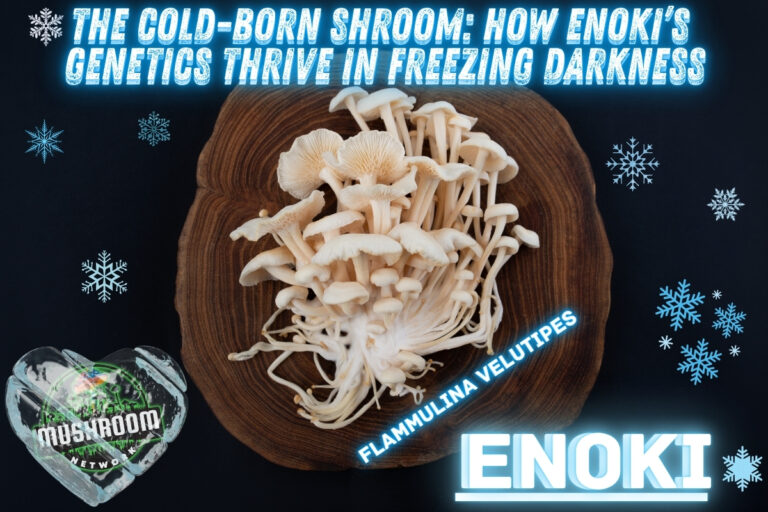
Buckle up, Myco-Wanderer. We’re diving into the frost-coded fungal genetics of Enoki—yes, that long, noodle-like mushroom in your ramen. But don’t let its skinny frame fool you. Beneath that ghost-white stem is a mutant power born from cold darkness, lab manipulation, and cell-apoptosis wizardry. Learn how Enoki’s genes adapted to thrive where other fungi freeze, and why researchers are obsessed with its potential to ice cancer cells from the inside out.
There is a fungus in the forest right now solving a problem you would struggle to describe, let alone fix.
Somewhere beneath your feet, a fungus has already adjusted to your presence.
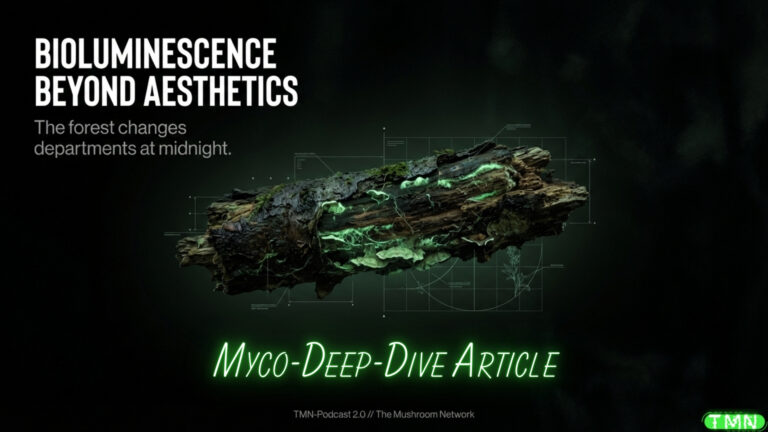
At night, parts of the forest don’t go dark — they glow. Bioluminescent fungi emit cold green light through a highly efficient chemical reaction that may function as both metabolic detox and ecological signaling. What looks like woodland ambiance might actually be evolutionary strategy. And once you realize nature doesn’t waste energy on aesthetics, the glow stops being magical and starts being deeply suspicious.

You’ve heard of plants responding to music. But what if mushrooms—the mycelial masters of the underground

The Mushroom That Ate Plastic—And Other Biotech Shroom Revelations Some mushrooms feed on wood. Some feed on dead bugs. This one craves plastic. Start Your SporeDive 🌌 You’ve heard of composting. Maybe even of mycoremediation. But did you know some…
