Category Cosmic Myco-Philosophy & Lore

Cosmic Myco-Philosophy & Lore
🌌 Cosmic Myco-Philosophy & Lore
Journey across infinite Myco-Verses—where philosophy tangles with fantasy, and spores write cosmic stories on the tapestry of time. Dive deep into metaphysics, creative fiction, and the wildest mushroom tales spun by stardust. Here, every cap is a universe, every mycelium a philosopher. Plug into the Grand Cosmic Mycelial Network and let your consciousness wander!

Bioluminescence Beyond Aesthetics: The Hidden Purpose of Fungal Light

At night, parts of the forest don’t go dark — they glow. Bioluminescent fungi emit cold green light through a highly efficient chemical reaction that may function as both metabolic detox and ecological signaling. What looks like woodland ambiance might actually be evolutionary strategy. And once you realize nature doesn’t waste energy on aesthetics, the glow stops being magical and starts being deeply suspicious.

The Mycelial Archives: Do Fungi Remember Every Version of You?

What if mushrooms weren’t just lifeforms—but librarians? Beneath the soil, mycelial networks don’t just pass nutrients—they might also pass you. From past-life imprints to vibrational echoes of decisions you didn’t make, some believe the Mycelial Archives store a record of every version of every being that has ever walked Earth (and beyond). This is more than reincarnation. This is fungal soul-mirroring—and yes, the mushrooms might remember you better than you do.

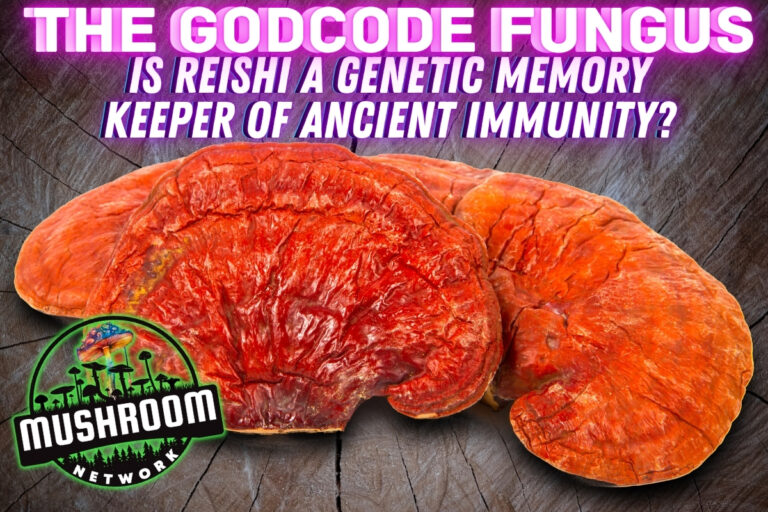
🍄 The Godcode Fungus: Is Reishi a Genetic Memory Keeper of Ancient Immunity?

What if one mushroom held the genetic equivalent of a cosmic backup drive? Reishi (Ganoderma lucidum), long revered as the “Mushroom of Immortality,” may encode immune intelligence across time and species. With potent tripterpenes and beta-glucans acting like immune-reprogramming nanobots, and an ability to shift genetically in response to host needs, this fungus might be the closest thing to biological magic Earth has to offer. Prepare to crack the Godcode.

Symbiotic Systems: Why Life Chooses Cooperation

Nature documentaries lied to you. Not maliciously. Just… dramatically. Because if you actually look closely at how life works, it’s less claws-and-chaos and more spreadsheets-and-cooperation, with fungi quietly doing logistics in the background. This is the story of the underground networks that make forests function, bodies survive, and ecosystems outlive extinctions. Read this if you enjoy having your assumptions gently dismantled and replaced with something smarter.

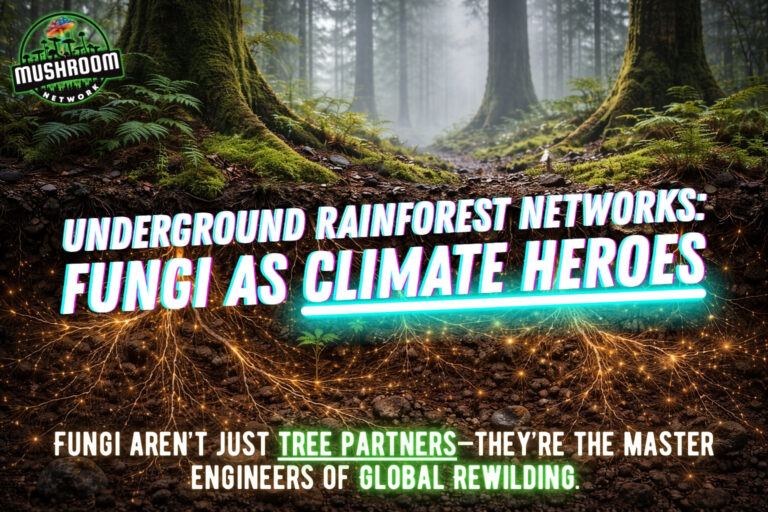
🌍 Underground Rainforest Networks: Fungi as Climate Heroes

Hidden beneath our feet are the fungal freeways that could rewrite Earth’s climate story. In Scotland’s Ballachuan Hazelwood, scientists from SPUN are sequencing fungal DNA to reveal the networks that let seedlings thrive and forests recover. This work stretches across the globe—from Colombia to Palmyra Atoll—mapping the Grand Cosmic Mycelial Network as a restoration blueprint. With Britain’s moist climate still ripe for temperate rainforest revival, fungi are stepping up as climate heroes, rebuilding ecosystems one spore at a time.

Zombie Ants in Space? The Cordyceps Invasion Begins
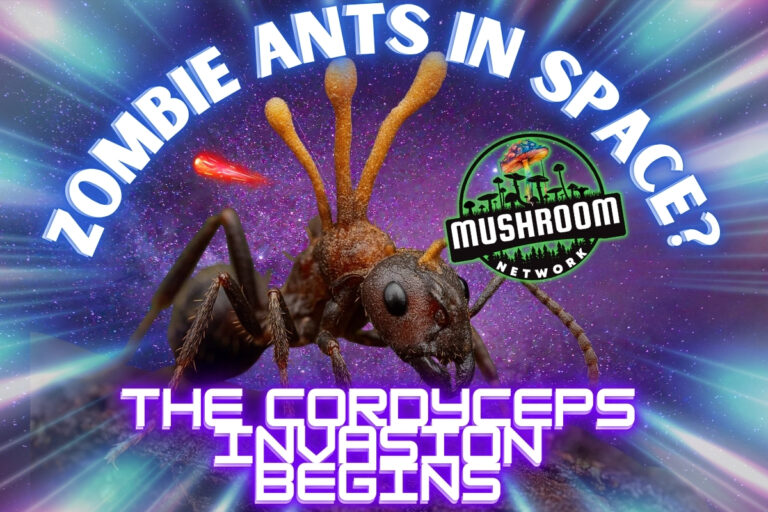
Cordyceps is not your chill adaptogen. It’s a mind-controlling fungal parasite with a flair for drama—and potentially, a future in off-world colonization. This real-life zombie fungus hijacks insect brains, erupts from their bodies, and uses them as mobile spore-launchers. Scientists are exploring its properties for medicine, warfare, and even terraforming. Could Cordyceps be a dark horse pioneer of planetary adaptation? Time to spore-lift the lid on one of Earth’s most terrifying—and fascinating—fungi.
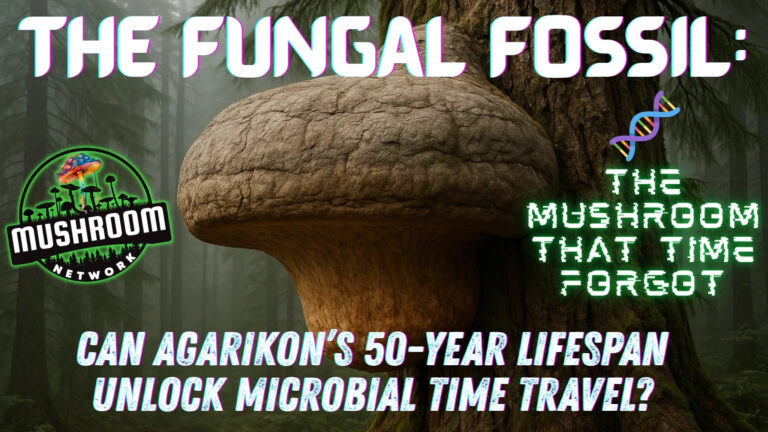
⏳ The Fungal Fossil: Can Agarikon’s 50-Year Lifespan Unlock Microbial Time Travel?

What if the cure to tomorrow’s viral outbreak was written into a mushroom that’s been growing since the ’70s? Enter Agarikon (Fomitopsis officinalis)—the long-living shelf fungus once used to treat plague symptoms and now being researched for its powerful antiviral genetics. From its towering, beehive-like form to its decades-long growth on ancient conifers, Agarikon might just be the fungal equivalent of a microbial time machine. Open the vault.

wpChatIcon