🧬 Genetic Hijacker: How Cordyceps Rewrites Insect DNA—And What That Could Mean for Us
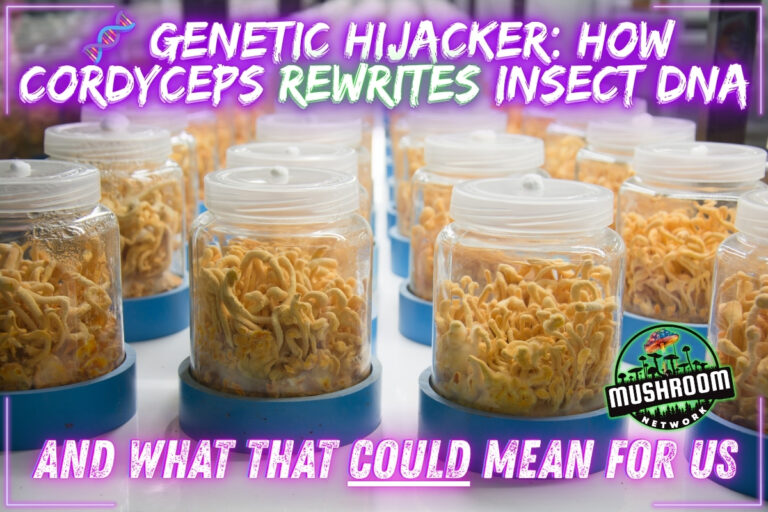
You’ve seen the zombie ant memes. Now meet the real Cordyceps militaris—the fungus that doesn’t just possess its prey but reprograms their genetic destiny

The Network That Connects Us All!
Factual, research-driven content about fungal biology, chemistry, and applied technologies.
You’ve seen the zombie ant memes. Now meet the real Cordyceps militaris—the fungus that doesn’t just possess its prey but reprograms their genetic destiny
Nature documentaries lied to you. Not maliciously. Just… dramatically. Because if you actually look closely at how life works, it’s less claws-and-chaos and more spreadsheets-and-cooperation, with fungi quietly doing logistics in the background. This is the story of the underground networks that make forests function, bodies survive, and ecosystems outlive extinctions. Read this if you enjoy having your assumptions gently dismantled and replaced with something smarter.
Move over, astronauts—fungi might be the real stars of space travel. In multiple out-of-this-world experiments, spores have survived freezing cold, scorching UV, and cosmic radiation without
Is your brain running on outdated firmware? 🧠🍄 Say hello to Lion’s Mane—a mushroom packed with compounds that don’t just support
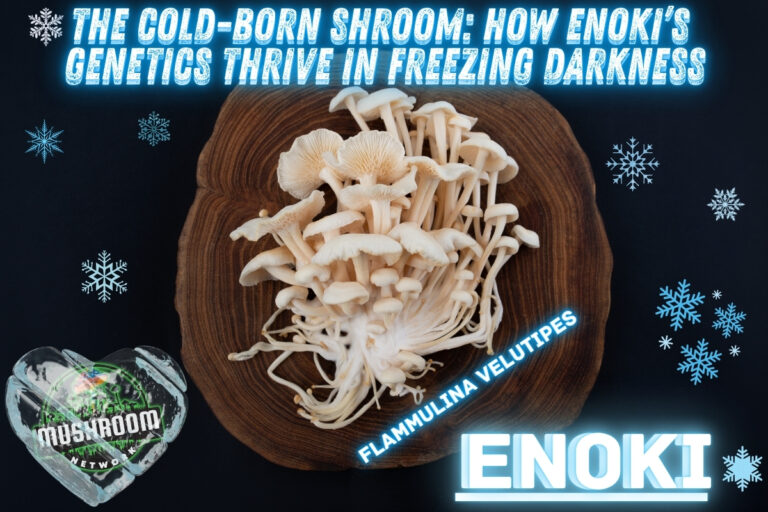
Buckle up, Myco-Wanderer. We’re diving into the frost-coded fungal genetics of Enoki—yes, that long, noodle-like mushroom in your ramen. But don’t let its skinny frame fool you. Beneath that ghost-white stem is a mutant power born from cold darkness, lab manipulation, and cell-apoptosis wizardry. Learn how Enoki’s genes adapted to thrive where other fungi freeze, and why researchers are obsessed with its potential to ice cancer cells from the inside out.
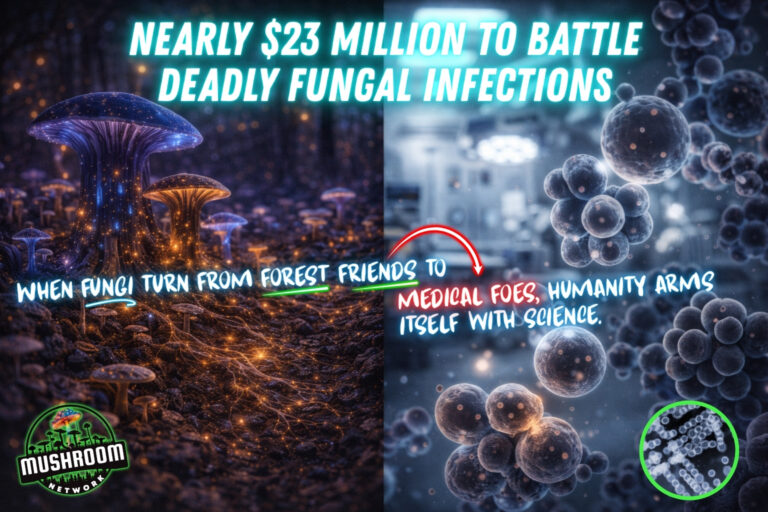
Fungi can heal, connect, and sustain—but some species kill. A new almost 23 million USD (£17.9M) initiative led by the University of Dundee, Exeter, and GSK is targeting two lethal fungal pathogens: Cryptococcus neoformans
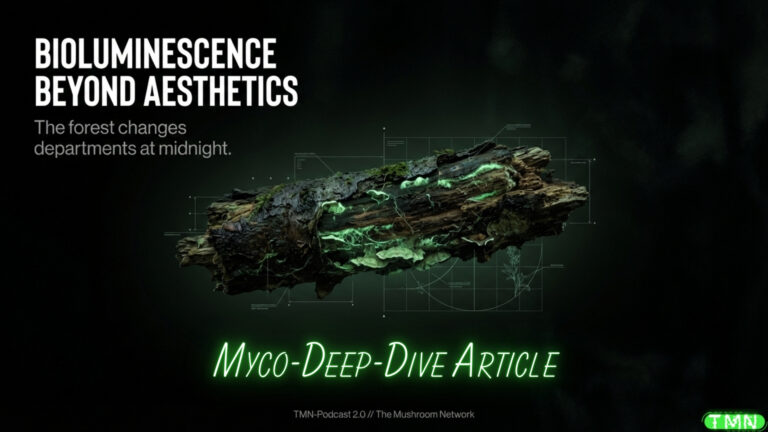
At night, parts of the forest don’t go dark — they glow. Bioluminescent fungi emit cold green light through a highly efficient chemical reaction that may function as both metabolic detox and ecological signaling. What looks like woodland ambiance might actually be evolutionary strategy. And once you realize nature doesn’t waste energy on aesthetics, the glow stops being magical and starts being deeply suspicious.

The Mushroom That Ate Plastic—And Other Biotech Shroom Revelations Some mushrooms feed on wood. Some feed on dead bugs. This one craves plastic. Start Your SporeDive 🌌 You’ve heard of composting. Maybe even of mycoremediation. But did you know some…
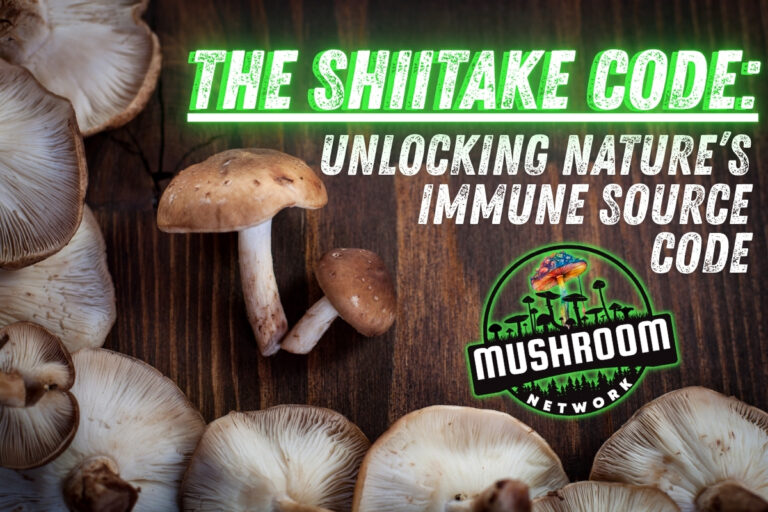
What if your immune system had a fungal co-pilot? 🍄 The shiitake mushroom, beloved in stir-fry, might also be whispering genetic upgrades through a compound called lentinan—tweaking T-cells and flipping anti-tumor gene switches like a cellular DJ. In this deeply sporetacular Myco-Article, we crack open the Shiitake Code and explore its role as an immune symphony conductor, ancient breeder’s masterpiece, and tree-whispering forest hacker. Tap in, Myco-Wanderers—your genome may already be listening.
A rare fungal killer—Syncephalastrum oblongispora—has just claimed its first documented life in Sub-Saharan Africa. The victim: an HIV-positive patient whose weakened immune defenses were no match for this aggressive mucormycete. This isn’t just a tragic case—it’s a cosmic alarm bell that fungi don’t play favorites. They adapt. They invade. They kill. Myco-Patrons, the spores are reminding us: vigilance is survival.
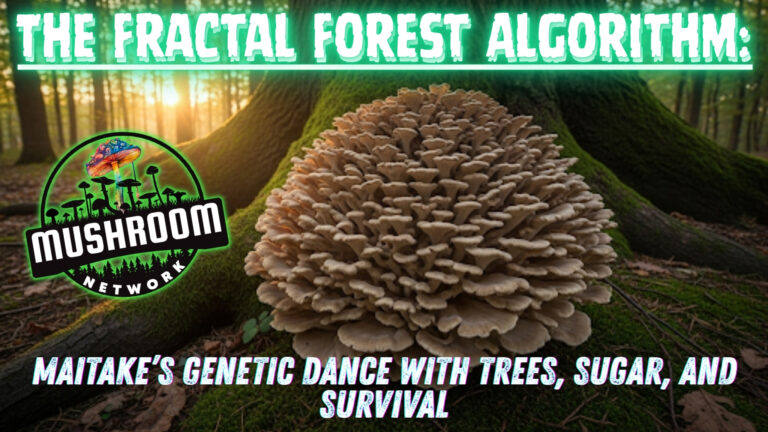
Maitake, aka Grifola frondosa, isn’t just a fluffy gourmet—it’s a forest-born algorithm tuning blood sugar through fractal-coded polysaccharides. Deep within its tree-dwelling genetics lie SX- and D-Fractions—compounds that can modulate insulin response like a biological DJ. But Maitake’s growth pattern, too, follows hidden forest codes: a genetic fractal geometry that mirrors the symbiosis of roots, sugars, and survival. What if this mushroom is showing us how nature thinks?

Are mushrooms cosmic doctors or alien coders? What if your microdose wasn’t a therapy session—but a software update for the soul? In this spore-spangled Myco-Article, we dive into the fungal philosophy of psilocybin as both healer and hardware hacker. Myco-Patrons, it’s time to ask: are the fun-guys fixing us… or upgrading the entire species from the inside out?
